 EN
EN

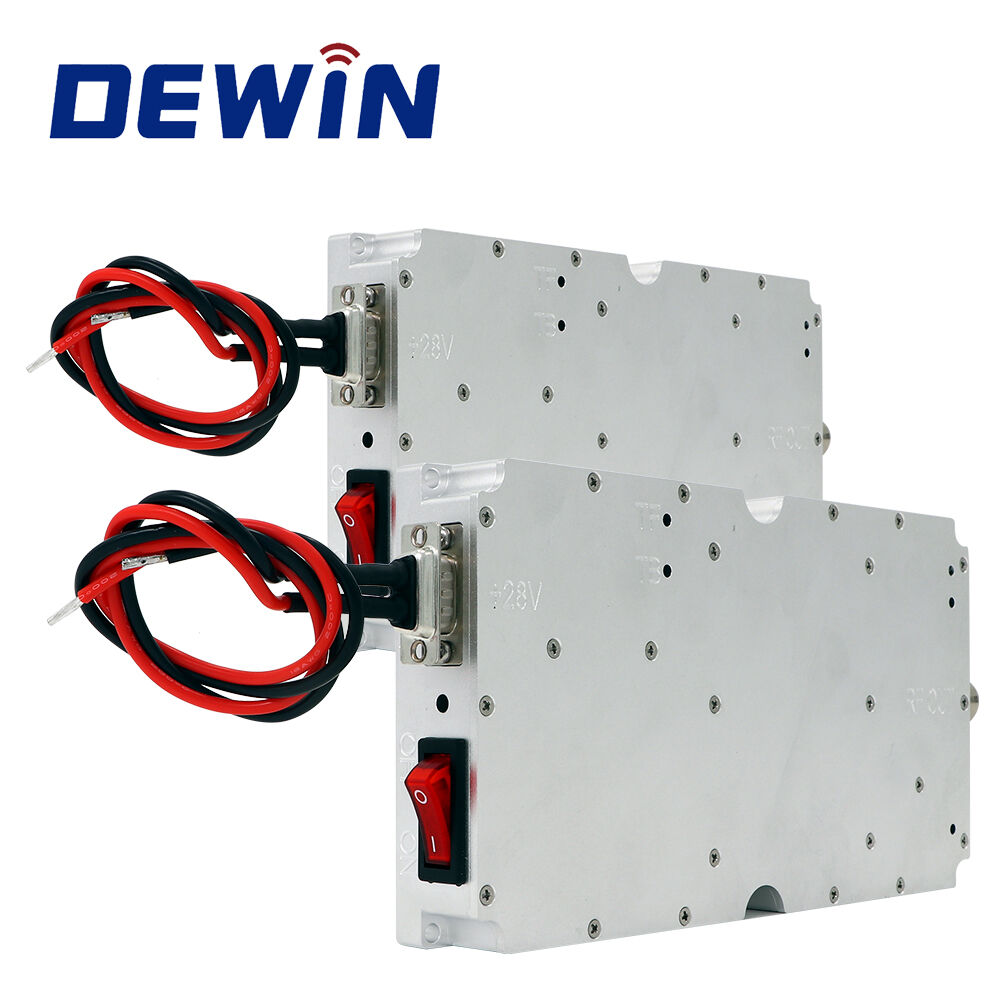
Technical Feasibility of 200W Anti-Drone Module Customization
RF Output Limits, Component Scaling, and Miniaturization Trade-offs
When trying to scale anti-drone modules up to 200W, we hit some basic limits in radio frequency physics. The jump in power means bigger power amplifiers are needed along with much more precise waveguides, which makes the whole unit about 40% larger compared to the 100W versions. Sure, this gives a longer effective range, but comes at the cost of making the system harder to carry around and deploy quickly. Gallium nitride (GaN) semiconductors help shrink things down somewhat, cutting back roughly 15 to 20% of that extra bulk, though they create their own headaches when it comes to managing heat. Looking at actual field tests conducted in cities and near critical infrastructure shows something interesting. Systems that find smart ways to balance all these factors can disrupt commercial drones from nearly 1.8 kilometers away, which is about 35% farther than regular 100W units, while still maintaining good signal quality on those important 2.4GHz, 5.8GHz frequencies and GPS signals.
Thermal Dissipation and Power Efficiency at Sustained 200W Output
Getting 200W RF output sustained over time needs serious thermal management work. Passive cooling just won't cut it for this kind of power level. Most systems need either built-in liquid cooled heat sinks or really efficient forced air cooling solutions. The efficiency drops off pretty quickly once we hit around 150W mark. At full power continuously, the system only converts about 68% of input energy into actual RF output. But there's a trick many operators use these days called dynamic power modulation. When threat levels drop, the system automatically lowers its output power. This simple adjustment can slash average energy usage by roughly 55% and gives equipment much longer runtime before needing maintenance. For situations where drones might be engaged for extended periods, phase change materials (PCMs) offer real benefits. These special materials soak up about 30% more heat compared to regular copper heat sinks. That means cores stay cooler even during intense operations like multi-drone swarm scenarios that can last nearly half an hour without overheating or shutting down completely.
Regulatory and Operational Implications of 200W Anti-Drone Modules
Spectrum Licensing, Collateral Interference, and Legal Compliance Risks
Running those 200 watt anti drone systems is actually governed by pretty tight spectrum licensing rules around the world. Take the United States for example, where anyone caught jamming without permission faces serious consequences from the FCC. We're talking about fines that can go above $100k for each offense according to their latest guidelines from 2023. When these devices operate at such high power levels, there's real danger of causing unintended interference problems. Think about how nearby airports might lose signal on their navigation equipment, or emergency services finding their communication channels blocked out within roughly three kilometers of the device. Things get even trickier when moving operations across borders. European countries follow ETSI standards which generally set lower power caps and restrict allowed frequencies much more strictly compared to what's permitted elsewhere. To stay compliant, companies need to do all sorts of tests before deployment starts. This includes checking electromagnetic compatibility through proper testing procedures, plus gathering detailed reports about existing signals in the area and creating models specific to each installation site. Without thorough documentation showing everything meets requirements, operators risk facing regulatory action or getting sued by affected parties. For anyone managing important infrastructure, understanding local laws isn't just good practice anymore—it's absolutely essential.
KEDA-MM’s Certified Customization Framework for High-Power Anti-Drone Modules
Modular Scalability Across 100W–300W Power Tiers with Field-Validated Integration
The KEDA-MM system can scale power output between 100 watts and 300 watts without needing any hardware changes. The design includes interchangeable Gallium Nitride amplifiers along with thermal management components that adjust based on conditions. These thermal parts work with phase change materials and different airflow configurations to create outputs suited for specific missions. For instance, it runs at lower power levels when monitoring city perimeters but ramps up for protecting large infrastructure areas. During tests at a real energy facility, the 200 watt modules kept signals strong across all bands including 2.4 GHz, 5.8 GHz, and GPS frequencies for distances reaching around 3 kilometers. They stayed operational throughout simulated drone swarms lasting nearly half an hour. Because everything is modular, setting up these systems takes about 60 percent less time than older fixed power solutions, which makes deployment much faster in the field.
End-to-End Validation: RF Profile Tuning, EMC Certification, and Deployment Readiness
The 200W anti-drone modules go through a thorough validation process before they hit the market. The first step involves RF profile tuning where we work with actual drone protocols from companies like DJI, Autel, and Skydio. This helps create those narrowband signals that specifically block unwanted control links without affecting other communications. Next comes the EMC testing phase which checks if everything meets FCC Part 15 Subpart B requirements as well as European standards like CE EN 55032. We need to make sure our devices don't emit anything outside what's allowed when running in different modes. According to recent industry reports from 2024, these pre-certified designs cut down on regulatory approvals by almost four fifths compared to traditional methods. Lastly, there are automated checks for each installation site looking at things like stable power supply, correct antenna positioning, and background electromagnetic interference levels. All this means operators can get their systems up and running right away after setup without unexpected issues popping up later.
Real-World Performance: Validating a 200W Anti-Drone Module at Critical Infrastructure
Tests conducted at an energy substation in Europe showed how effective these systems can be in practice. The custom built 200 watt module managed to stop drones from getting through successfully about 98.7 percent of the time during 150 test cases according to the 2024 Critical Infrastructure Defense Report. Using multiple sensors together allowed detection as far away as 1.8 kilometers, and then started jamming signals within just over two seconds. Thermal images confirmed everything was running smoothly too, with internal temps staying under 85 degrees Celsius even when transmitting full power continuously while outside temperatures hit 38 degrees. What's really impressive is that there were absolutely no issues with nearby equipment like SCADA systems, cell network connections, or emergency radios. This happened because the system targets specific frequencies precisely and filters out unwanted signals in real time. After adjusting the radio frequency profiles, security personnel noticed something remarkable: not a single false alarm went off anymore. This proves beyond doubt that these carefully designed 200 watt modules deliver exactly what's needed for protecting vital infrastructure safely and reliably.
FAQs
What are the specific challenges in scaling anti-drone modules to 200W?
The primary challenges include the need for larger power amplifiers and precise waveguides, which increase the unit size by about 40%. Although Gallium Nitride semiconductors can help reduce size, they present heat management challenges.
How does dynamic power modulation help in the efficiency of anti-drone systems?
Dynamic power modulation lowers the system's output power when threat levels are reduced. This cuts average energy usage by approximately 55% and prolongs the system's runtime without requiring maintenance.
What are the regulatory risks of operating 200W anti-drone modules?
Operating at 200W is subject to strict spectrum licensing. Unapproved jamming can lead to hefty fines. High power can also cause interference with airports or emergency services, making it crucial to comply with local regulations.
How do KEDA-MM systems optimize the deployment of anti-drone modules?
KEDA-MM systems allow interchangeable power scales from 100W to 300W using modular components, reducing setup times by 60% compared to older systems and improving integration with field-validated solutions.