 EN
EN

Understanding the Drone Threat to Low-Altitude Security
The rise of unauthorized drone activity near critical infrastructure
The number of unauthorized drone flights around power plants, government buildings, and communications towers shot up by nearly two thirds from 2020 to 2023 according to various airspace violation records we've been tracking. These days, regular consumer drones are getting into restricted areas within five miles quite often, sometimes carrying fancy gear like thermal imaging cameras or devices that can pick up signals to map out weaknesses in infrastructure. Last year's security check found something alarming too: almost half (that's 41%) of all energy firms don't have systems in place to detect these unmanned aerial vehicles in real time. This means vital equipment such as electrical substations and oil pipelines remain vulnerable to being scouted out by whoever might want to cause trouble.
Case study: Drone disruptions at major international airports
Back in 2021, when a lone drone flew into Dubai International Airport, they had no choice but to shut everything down. The airport lost around $1.4 million every single hour flights were delayed because of this intrusion. This event really highlighted how poorly equipped we are for tracking things happening so close to ground level. Even though there are obvious dangers here, most airports (about 73%) still depend on people watching the sky for drones under 200 meters high. But let's face it, this approach doesn't work well against today's fast moving UAVs that can zip along at 120 kilometers per hour while staying almost invisible due to their tiny size - sometimes just 4 centimeters across! Looking at FAA records from last year shows over 2,300 instances where drones came dangerously close to aircraft in American skies. Nearly 4 out of 10 of those cases involved consumer grade drones that someone had tinkered with specifically to avoid getting caught.
How consumer drones evolved into security threats
Consumer drones priced around $800 today actually beat what military UAVs could do back in 2015. These little gadgets come with impressive specs like an 8 kilometer range, smart AI that tracks objects, plus those handy modular payload compartments. Security folks have had to completely change how they think about threats because of this tech jump. Take the DJI Mavic 3 for instance it can hang around for 40 whole minutes sending back encrypted video streams that look just like what legitimate industrial drones would transmit. The numbers are pretty staggering too. Last year, security forces caught more than half of all illegal drones using sneaky firmware tricks to pretend they were legal until suddenly flying into no fly areas as planned.
Core Components of Anti-Drone Technology (C-UAS) Systems
Detection, classification, and response: The anti-drone solution architecture
Counter drone technology typically operates through three main stages of operation. The first step involves detection where various sensors pick up on unmanned aerial vehicles. These include traditional radar systems, radio frequency scanners, and optical detection equipment that can spot drones even in low visibility conditions. After detection comes threat assessment. Advanced software analyzes how a drone is flying, looking at things like altitude changes, speed patterns, and communication signals to determine if it poses any real risk. When a genuine threat is identified, the system responds accordingly. Some setups might send out false GPS signals to confuse the drone, others could block specific frequencies used for control. The goal is always quick neutralization without causing unnecessary interference with legitimate wireless communications nearby. Most modern systems aim for this balance between effectiveness and minimal collateral impact.
Passive vs. active anti-drone technologies: Pros, cons, and operational trade-offs
Passive systems rely on RF detection along with optical tracking methods to keep tabs on drones while staying quiet themselves, which cuts down on interference problems but leaves nothing in place when action is needed. On the flip side, active systems get their hands dirty by using directional jammers or fake signal emitters to break those control connections between drones and operators. This approach stops threats right away, though it might mess with other wireless stuff going on nearby. These days, pretty much every facility that takes security seriously has gone hybrid. They mix passive monitoring for spotting trouble early with active tools ready to respond when necessary. The whole setup tries to find that sweet spot between keeping things safe and making sure operations run smoothly without unnecessary disruptions.
Integration of command and control interfaces in C-UAS platforms
When organizations integrate command and control (C2) systems, they get a single point to manage all sorts of different sensors and defensive tools via software dashboards. What happens behind the scenes is pretty impressive actually. The system brings together all those separate data feeds, automatically sends out alerts when something goes wrong, and keeps track of everything that's done for audits later on. For people working on the front lines, these platforms really cut down on the busy work. Operators can set policies ahead of time so the system responds appropriately without needing constant oversight. This means teams stay better informed about what's happening across their networks and can jump into action much faster when dealing with complicated security breaches.
Multi-Sensor Detection: Enhancing Accuracy Through Sensor Fusion
For securing areas at low altitudes, combining different sensing technologies makes sense since no single system works perfectly alone. Radar systems for detecting unmanned aerial vehicles offer good all day long coverage within about five kilometers range when looking at objects flying under 500 meters altitude. However these radars often miss smaller drones especially in cities where buildings create signal interference problems. Another approach involves radio frequency sensors that pick up control signals transmitted on common wireless frequencies like 2.4 GHz and 5.8 GHz. Field testing shows these RF detectors can actually recognize particular drone brands based on their signal patterns around 8 out of 10 times which helps security teams respond appropriately to potential threats from various types of unmanned aircraft.
Thermal imaging along with optical electronic systems gives clear visual proof that helps tell apart drones from birds about 92% of the time during daylight hours. Putting these technologies together using sophisticated data fusion methods makes everything much more reliable. The sensors line up better so there are fewer areas where nothing can be seen. Machine learning algorithms pick up on how things move and behave, making it easier to spot real threats. And when it comes to false alarms, this integrated approach knocks them down by around two thirds compared to systems working alone. That's a pretty big difference for security operations trying to stay ahead of potential problems.
Single technology approaches just don't cut it when it comes to drone detection these days. Radar systems miss about 40 percent of small drones that fly under 30 meters between buildings, while radio frequency detectors struggle with autonomous UAVs following pre-programmed GPS paths. The latest studies on layered security systems show something interesting though. When different technologies work together, they create better protection. This combination helps keep things running even when there's electromagnetic noise or if one sensor goes down for some reason. What we're seeing is essentially a moving target defense strategy that adapts as new types of threats emerge in this constantly changing landscape.
AI and Machine Learning in Real-Time Drone Detection
Role of CNN and YOLO Models in Optical Drone Identification
More and more anti-drone defenses are turning to advanced technologies like Convolutional Neural Networks (CNNs) and the YOLO architecture for processing camera feeds on the fly. The latest research shows these artificial intelligence systems can spot tiny drones measuring just around 30 square centimeters with impressive accuracy rates near 93% during daylight hours according to ScienceDirect in 2025. And let's face it, no human watcher could match this kind of reaction time or reliability. CNN technology works by picking out specific visual clues from drone footage such as how rotors are arranged and how stable their flight path appears. Meanwhile, YOLO stands out because it only needs one quick scan through video data to make identifications, which makes all the difference when trying to catch those speedy unmanned aerial vehicles before they get anywhere near restricted areas.
Machine Learning for Behavioral Pattern Recognition in RF Signatures
Machine learning enhances RF-based detection by identifying malicious behavior beyond simple signal presence. Trained on over 12,000 RF samples (NQ Defense 2023), algorithms now detect evasion tactics like frequency hopping with 88% precision. Advanced capabilities include:
- Payload prediction: Correlating RF burst patterns with known video transmission signatures
- Swarm coordination detection: Identifying synchronized communication across multiple drones
- Pilot geolocation: Triangulating controller positions using signal strength variance
When integrated into multi-sensor detection frameworks, these models reduce false positives by 62% compared to radar-only systems.
Challenges in Training Data Quality and Model Accuracy for Real-World Deployments
Despite advances, AI systems face real-world deployment challenges:
- Sensor-environment mismatch: Models trained in controlled settings underperform in cities due to RF clutter and occlusion
- Adversarial attacks: Modified transmitters can spoof legitimate drone signatures
- Model drift: Rapid evolution of consumer drones leads to performance decay䀓a 2024 study found legacy systems suffered a 34% accuracy drop when tested against new UAV models
To address these issues, developers are adopting federated learning networks that pool anonymized data across sites and using synthetic data generation to simulate rare or emerging threat scenarios.
Effective Countermeasures: From Signal Jamming to Physical Capture
Radio Frequency Jamming: Principles and Regulatory Considerations
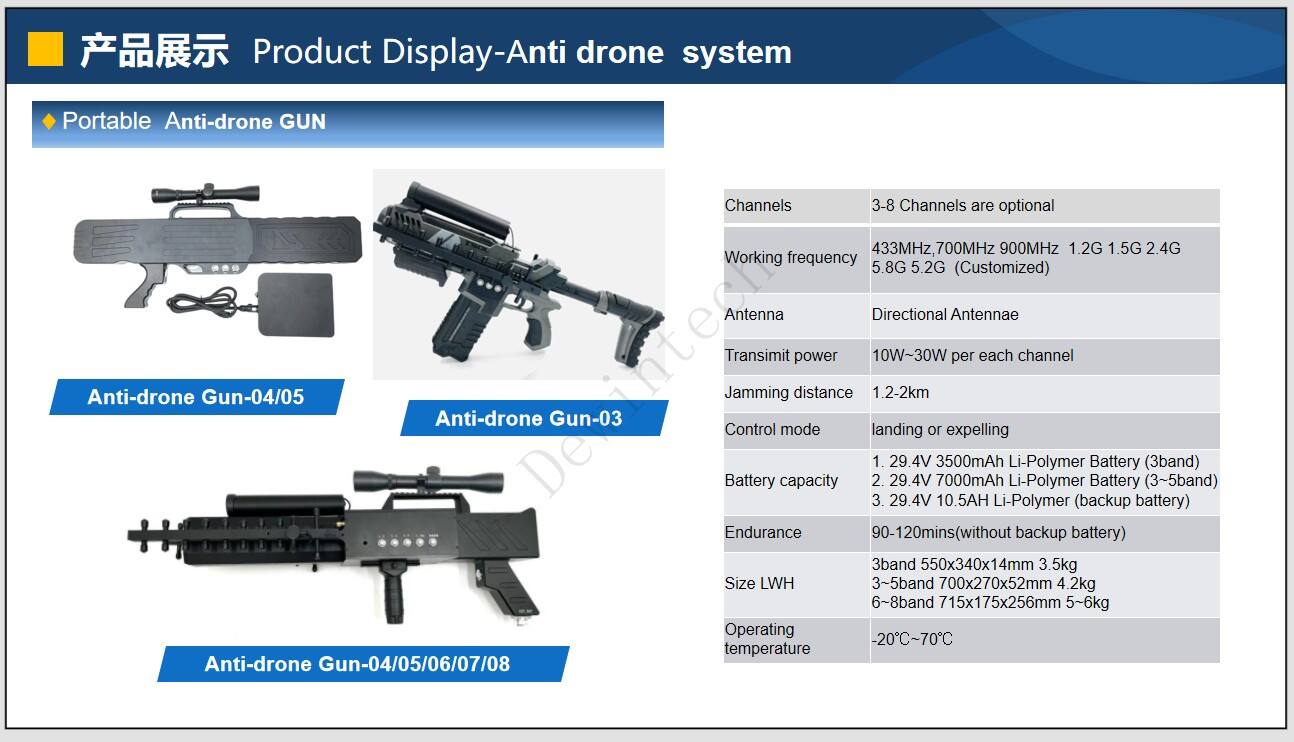
RF jamming works by cutting off the link between drones and their controllers, specifically going after those 2.4 GHz and 5.8 GHz frequencies most commonly used for control signals. When this happens, most drones either automatically fly back home or just drop out of the sky altogether. But there's a catch. The technique runs into trouble with laws and regulations. According to research from the Aviation Security Council last year, around two thirds of all airports deal with legal issues because these jammers might accidentally mess with important air traffic systems or emergency radio channels. That makes implementation tricky for authorities trying to manage drone traffic safely.
GPS Spoofing and Signal Disruption Tactics
GPS spoofing deceives drones by broadcasting false coordinates, guiding them away from protected areas. Field tests in 2023 showed 89% success in redirecting waypoint-dependent UAVs. Military-grade systems combine spoofing with pulsed RF disruption for higher reliability, though precise frequency control is required to comply with international spectrum regulations.
Net Guns and Kinetic Interception
Sometimes when electronic countermeasures just don't work, kinetic solutions come into play. Think net shooting drones or those compressed air launchers that physically grab incoming threats. According to a NATO report from last year on Counter-UAS technologies, they managed to catch around 95 percent of targets moving slower than 50 miles per hour and flying below 200 meters high. But there's a catch with all this hardware. These systems can cause unintended damage nearby, which is why most places limit their deployment. Usually, operators need at least half a kilometer of clear space between the equipment and any populated area before they're allowed to activate them.
Industry Shift Toward Non-Kinetic Solutions
Market research suggests the electronic counter-drone sector will see explosive growth, clocking in around 29% annual increase all the way to 2028. This surge comes from businesses wanting flexible defenses that don't involve blowing things up. Today's systems combine smart jamming techniques, machine learning algorithms that analyze signals, plus automatic frequency switching capabilities. These technologies help neutralize drones without actually touching them, which makes these systems ideal for cities and crowded areas. Safety concerns and strict regulations just make sense here since nobody wants debris falling from the sky during rush hour traffic.
FAQ Section
What is the main threat posed by consumer drones?
Consumer drones pose a threat due to their ability to operate in restricted areas, sometimes equipped with advanced technology like thermal imaging cameras. They can scout infrastructure vulnerabilities, thus posing significant security risks.
How effective are anti-drone technologies in combating these threats?
Anti-drone technologies operate through detection, classification, and response. While these technologies vary, combining them—such as radar, RF detectors, and optical systems—provides a more comprehensive defense system.
Are there legal challenges associated with counter-drone measures?
Yes, legal challenges exist, particularly with methods like RF jamming, which can inadvertently interfere with important communication systems, making their implementation tricky under current regulations.
How do AI and Machine Learning contribute to drone detection?
AI and Machine Learning improve drone detection by using advanced models that analyze optical and RF data in real-time, enhancing accuracy and reducing false positives.