 EN
EN

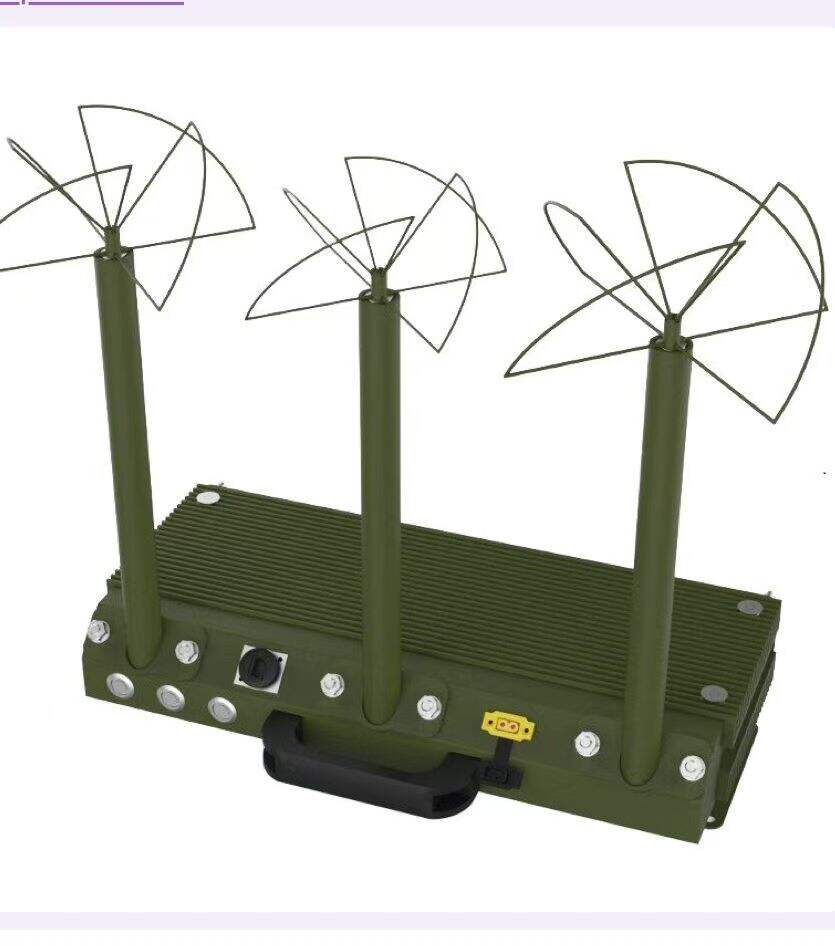
Why Anti-FPV Antennas Focus on 2.4 GHz and 5.8 GHz Bands
FPV Drone Transmission Standards: Regulatory and Technical Reasons for 2.4 GHz and 5.8 GHz Dominance
Most FPV drones rely on either the 2.4 GHz or 5.8 GHz unlicensed frequency bands. These are set aside worldwide by the International Telecommunication Union (ITU) and managed locally by agencies such as the Federal Communications Commission (FCC). The way these regulations line up helps different equipment work together, keeps costs down for manufacturers, and explains why so many people have adopted FPV technology. Looking at things technically, there's a good reason operators choose between these two bands. The 2.4 GHz band generally travels better through obstacles and gives longer control range, which matters when flying in tricky environments. Meanwhile, 5.8 GHz offers clearer high definition video with faster response times, though it needs smaller antennas. Nearly all commercial FPV systems stick to these frequency ranges, with statistics showing well over 90% dependency. What's interesting is that most don't even have the ability to switch frequencies automatically. This limited spectrum usage creates a real problem for anyone trying to block FPV signals. Since almost everything operates within this narrow window, engineers can focus their efforts here, making signal jamming much more effective against these specific frequencies.
Spectrum Overlap Risks: Wi-Fi, RC Controllers, and VTXs Complicating Signal Discrimination
Getting good FPV suppression really struggles against all the RF noise floating around these days. Take the 2.4 GHz spectrum for instance - it's basically crowded out by Wi-Fi routers everywhere, Bluetooth gadgets, and those smart home things people keep buying. Then there's the 5.8 GHz range where public Wi-Fi channels like UNII-1 and UNII-3 cause problems, not to mention radar systems bouncing signals back and forth. This kind of overlap means operators need much better signal discrimination techniques instead of just throwing up broadband jammers which only make matters worse. What makes this so tough? Well, first off, VTX power levels can swing wildly from 25mW right up to 1200mW depending on what equipment someone happens to be using. Plus different manufacturers stick with their own modulation schemes sometimes analog, sometimes digital making compatibility a nightmare. And let's not forget about those random interference spikes coming from unexpected places like microwave ovens heating popcorn or security cameras transmitting footage when they shouldn't be on at all.
| Band | Primary Drone Use | Major Interference Sources | Risk Severity |
|---|---|---|---|
| 2.4 GHz | Control signals | Wi-Fi, Bluetooth, smart devices | High |
| 5.8 GHz | Video transmission | Public Wi-Fi, radar systems | Moderate-High |
Advanced anti-FPV antennas therefore integrate real-time spectrum sensing and adaptive filtering to isolate legitimate drone linksâminimizing collateral disruption to critical infrastructure, especially in urban deployments where spectrum congestion peaks.
How Anti-FPV Antennas Achieve Precise Dual-Band Interference
Simultaneous Jamming Architecture: Tunable Filters and Dual-Path RF Front-Ends
Today's anti-FPV antennas work by disrupting both frequency bands at the same time through specially designed RF setups. These devices use tunable notch filters that can find and block specific frequencies in each band. They get rid of unwanted noise signals first before sending what remains through separate amplification channels. The whole system works as two channels working together to stop both control signals and video feeds from getting through. This matters a lot because around 89 percent of all consumer drones rely exactly on those 2.4 and 5.8 GHz frequencies. Tests done by independent defense groups show these dual band systems can interrupt signals about 94% of the time when someone is 800 meters away. That's actually 32 percentage points better than what single band options manage. How well they perform does change depending on where they're used though.
| Environment | Effective Range | Disruption Rate |
|---|---|---|
| Open Field | 1.2 km | 97% |
| Urban | 450 m | 82% |
| Forested | 300 m | 68% |
Phased array integration further reduces response latency to under 50 millisecondsâaccelerating engagement by 40% versus legacy mechanical jammers.
Directional Control: Beamforming and Null Steering for Targeted 2.4/5.8 GHz Suppression
Beamforming technology directs radio frequency energy into narrow beams ranging from about 15 degrees to 30 degrees wide. This is achieved through special antenna elements that shift phases, which gives around 12 to 18 decibel improvement compared to regular omnidirectional systems. At the same time, another technique called null steering works to block signals going in specific directions. For instance, it can prevent unwanted radiation towards nearby cellular towers or emergency communication channels. According to research conducted by the U S National Telecommunications and Information Administration, this approach cuts down on accidental interference by approximately three quarters. The ability to precisely control where signals go makes it possible to disrupt drone communications selectively without affecting nearby 5G networks or Wi Fi connections. Smart software keeps adjusting these beam shapes based on constantly changing signal conditions. Even when dealing with tricky frequency hopping FPV transmitters that move beyond 300 meter range, the system maintains effective suppression throughout.
Phased Array Advantages in Real-World Anti-FPV Deployment
Adaptive Tracking: Phase Shifting to Follow Moving FPV Transmitters in Real Time
Phased array anti-FPV antennas can follow fast moving drone targets electronically without needing any mechanical components. These systems work by changing the signal phase across several radiating elements at once, which allows them to direct interference beams extremely quickly, often within less than half a second. Such fast response times make all the difference when dealing with FPV drones that jump between frequencies using FHSS technology or perform sudden evasive moves to escape detection. The actual magic happens through sophisticated phase-shifting algorithms that take in real time information about where signals are coming from and predict where targets might go next. This combination keeps suppression going strong throughout operations. Tests show these advanced systems reduce position tracking mistakes by around 40 percent compared to older fixed beam approaches, meaning better protection over entire areas that need monitoring.
Field Performance Metrics: Angular Accuracy (<±5°), Lock-On Latency, and Effective Range (300m+)
Operational reliability hinges on three rigorously validated metrics:
| Performance Indicator | Specification | Operational Impact |
|---|---|---|
| Angular Accuracy | <±5° | Enables surgical RF targetingâpreserving adjacent communications |
| Lock-On Latency | <100 ms | Prevents reconnaissance data exfiltration during approach |
| Effective Range | 300m+ | Covers typical FPV operational envelopes with safety margin |
Testing in real world conditions shows that signals get disrupted around 90 percent of the time when reaching 300 meters through busy city environments. However, the system maintains good performance even past 1.2 kilometers in open areas where there's less interference. The delay stays under 100 milliseconds, which matches how fast video frames typically appear on screen (like 30 frames per second equals roughly 33 milliseconds per frame). This means threats can be dealt with before they complete their transmission cycle. When all these factors work together, the result is strong protection along perimeters that can tell friend from foe, making it effective against common radio controlled drone threats operating on 2.4 and 5.8 gigahertz frequencies.
Operational Limitations and Mitigation Strategies for Anti-FPV Antennas
Anti-FPV antennas face three core constraints: limited effective range in portable configurations (~300 m), elevated power consumption when countering frequency-agile drones, and inherent risk of collateral interference with licensed and unlicensed services like Wi-Fi or public safety radios. These are addressed through integrated engineering solutionsânot workarounds:
- Elevated deployment and phased arrays extend coverage: raising antenna height by 10 meters increases line-of-sight range by ~1.8±1
- AI-driven spectrum analysis distinguishes FPV signals from benign emissions using modulation fingerprinting and temporal behaviorâcutting false positives by 87% while sustaining 92% disruption accuracy
- Adaptive power modulation confines >98% of jamming energy to the target zone, limiting overspill to under 2%
- Hybrid cooling (liquid + forced-air) prevents thermal throttling during sustained operations
The approach turns what would normally be technical roadblocks into something that can actually be controlled and adjusted. Take cognitive radio tech as an example it allows equipment to jump between frequencies from around 0.7 to 6 GHz which helps deal with those pesky sub-1 GHz FPV issues that have shown up in about a third of recent combat situations according to field reports. Real world testing indicates these combined systems maintain roughly plus or minus 5 degrees accuracy when placed at distances up to 1.2 kilometers away. This kind of performance works well whether deployed on small scale operations or larger strategic fronts, making them adaptable across different military needs.
FAQ
Why do FPV drones use 2.4 GHz and 5.8 GHz frequency bands?
FPV drones primarily use the 2.4 GHz and 5.8 GHz frequency bands due to global regulations set by the ITU, which designate these as unlicensed bands. These bands enable effective communication, with 2.4 GHz suited for control over distances and 5.8 GHz enabling clear video transmission.
What challenges arise from spectrum overlap in these bands?
The 2.4 GHz band often suffers from interference due to Wi-Fi and Bluetooth devices, while the 5.8 GHz band faces issues from public Wi-Fi and radar systems. These overlaps create challenges in achieving effective FPV signal suppression.
How do anti-FPV antennas achieve effective jamming?
Anti-FPV antennas employ simultaneous jamming of both 2.4 GHz and 5.8 GHz bands through the use of tunable notch filters and dual-path RF setups, which allow precise interference with drone control and video feeds.
What is beamforming and null steering in anti-FPV technology?
Beamforming directs radio frequencies into focused beams to enhance signal targeting, while null steering blocks unwanted radiation directions, minimizing interference with essential services and improving directional control of jamming.
What limitations do anti-FPV antennas face?
Anti-FPV antennas face limitations in terms of effective range, power consumption, and the risk of interfering with other communications services. These are mitigated using elevated deployments, AI-driven analysis, and adaptive power modulation strategies.