 EN
EN

Understanding FPV Drone Video Transmission and Its Vulnerabilities
The role of analog video links (VTX, 5.8GHz systems) in FPV drones
Most FPV drone systems still depend on analog video transmitters working at 5.8GHz frequencies for their main visual connection. These devices send live images to pilot goggles with latencies below 50 milliseconds, which is pretty impressive considering what they're doing. Around 8 out of 10 commercial FPV drones stick with this old school approach instead of going digital. Why? Because pilots care more about getting those split second visuals than worrying about encrypted signals or fancy error corrections. The reason so many folks choose the 5.8GHz band boils down to practicality. It offers decent range usually between 1 and 4 kilometers while standing up better against signal interference problems that plague lower frequency bands. Sure there are some exceptions, but for most hobbyists and professionals alike, this remains the go to solution despite newer technologies emerging in recent years.
How video transmission in FPV drones relies on unencrypted signals
According to some cybersecurity research from last year, around two thirds of consumer FPV systems don't have any kind of signal encryption at all, leaving them wide open for exploitation. Think about it this way: while our phones and home internet connections use sophisticated security measures, most FPV systems still rely on old school analog transmissions that send video signals completely unencrypted. The result? Anyone with access to simple SDR equipment can basically tap into these signals, steal flight data, or mess with the video feed by injecting random noise patterns. And things aren't getting much better on the manufacturing side either. Security experts have pointed out that barely more than a dozen percent of VTX makers bother with even basic FHSS protection technologies, which is pretty alarming when we consider how vulnerable these systems actually are.
Common frequency bands used in FPV (first-person view) systems
FPV systems primarily operate across three frequency bands, each with distinct performance tradeoffs:
| Band | Range | Penetration | Susceptibility to Interference |
|---|---|---|---|
| 1.3GHz | 8–12km | High | Moderate |
| 2.4GHz | 3–6km | Medium | High |
| 5.8GHz | 1–4km | Low | Medium |
Industry frequency analysis shows 79% of racing and recreational drones default to 5.8GHz channels to avoid overcrowded 2.4GHz bands shared with Wi-Fi routers and Bluetooth devices.
Why open-loop transmission makes FPV susceptible to signal denial
Analog VTX systems have a major problem when it comes to two-way communication, which means they can't fix errors as they happen. This opens the door for those anti-FPV devices to mess with the signal by sending out targeted noise at 5.8GHz frequencies. The open loop design doesn't check if data packets actually reach their destination, so even short bursts of interference lasting half a second or more will knock out the entire video feed. According to tests done by military folks last year, jammers working at 5.8GHz successfully block signals from analog FPV drones about 92% of the time. That's way higher than what happens with encrypted digital systems such as DJI's OcuSync where success rates drop to around 47%. Why does this happen? Well, analog equipment tends to stick to fixed channels and follows pretty predictable transmission patterns, making them easy targets for anyone wanting to disrupt the signal.
How Anti-FPV Modules Exploit Weaknesses in Drone Video Links
Core principles of anti-FPV module technology
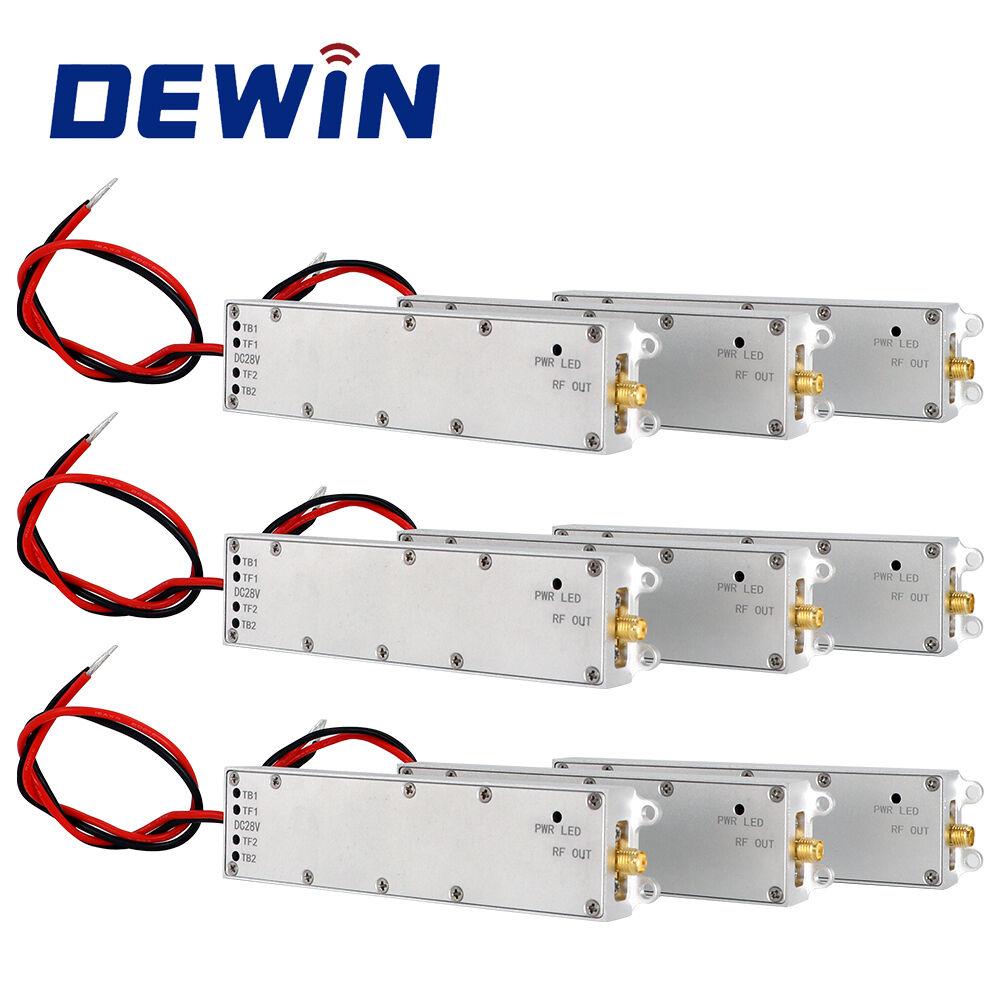
Anti-FPV modules work by breaking up the video connection from drones through weaknesses in how analog signals get transmitted. What these gadgets do is create special radio waves that interfere with the drone's main signal. Usually they need to be about 20 dB stronger than what the drone sends out so it can take over control from the pilot. According to some tests done by the military back in 2023, these anti-drone tools managed to stop about 95 percent of all transmissions on 2.4GHz frequencies when tested at around half a kilometer away. They accomplish this mostly because they use focused antenna setups that point their signal right where it needs to go instead of broadcasting everywhere randomly.
Jamming vs. spoofing: Electronic warfare tactics in anti-drone defenses
Jamming floods drone receivers with noise, while spoofing injects false control commands. For example:
- Jamming: Saturates 5.8GHz channels with amplified RF signals, inducing 1.2-second latency in video feeds (enough to destabilize flight paths).
- Spoofing: Mimics legitimate control signals to hijack navigation systems, a tactic significantly more effective against drones lacking signal encryption.
Targeting 5.8GHz systems: Frequency-specific disruption mechanisms
Over 78% of consumer FPV drones rely on 5.8GHz for video transmission, making this band a priority for anti-FPV systems. Modules deploy swept-carrier jamming, rapidly cycling through sub-bands like 5725–5850MHz to disrupt frequency-hopping evasion attempts. Field tests show this method degrades video resolution to <480p within 3 seconds of activation.
Exploiting lack of encryption and fixed channels in analog FPV
Old school analog FPV setups don't have proper encryption from start to finish, which means those anti-FPV gadgets can easily spot and target their frequency channels. These jamming devices work by looking for strong signals in the 5.8GHz range and then zeroing in on weak spots in the transmission. Some recent tests showed pretty shocking results too - around 90% success rate in disrupting analog systems compared to just 45% when dealing with secure HD options such as DJI's OcuSync technology. No wonder then that traditional analog FPV is still falling behind so badly when it comes to fighting off today's advanced drone defense tech.
Technical Impact of Anti-FPV Interference on Drone Operations
Packet Loss and Latency Induced by Anti-FPV Interference
When anti-FPV modules go active, they basically mess up drone operations by flooding those video signal paths with specific radio frequency noise. Field tests from last year found that this kind of interference can push packet loss rates past 45% in typical 5.8GHz analog systems. The result? Latency problems that spike around 68% higher than normal levels, which makes it really hard for pilots to maintain stable control during flights. Military folks who've tested this stuff report something pretty concerning too. They noticed that when FPV drones depend heavily on constant video streams, their targeting gets off track about 31% of the time because of these disruptions. Makes sense why defense agencies are so worried about this technology spreading.
Spectrum Analysis of Jammed 5.8GHz Analog Video Links
Lab and field tests reveal distinct disruption patterns across jamming approaches:
| Jamming Method | Effective Range | Packet Loss Rate | Real-World Success |
|---|---|---|---|
| Broadband Noise | 800m | 92% | 73% |
| Targeted Frequency | 1.2km | 98% | 88% |
| Adaptive Waveforms | 600m | 85% | 67% |
Data shows frequency-specific jamming outperforms blanket noise by exploiting fixed FPV channels (Industry Analysis 2023).
Impact on Pilot Situational Awareness Due to Video Feed Degradation
When anti-FPV systems mess with video feeds, pilots basically lose their window into what's happening around them. According to some research done back in 2022 by the military, almost half (that's 40%) of operators didn't see ground obstacles when their signals were jammed, whereas only about 8% missed things when everything was working normally. The problem gets even worse when real time data stops coming through too. We've seen this play out on the front lines in Ukraine where drones experiencing signal interference ended up crashing at a rate nearly four times higher than those with clear connections. Makes sense really since without good info, mistakes happen faster.
Effectiveness Against Digital HD Systems Like DJI OcuSync: Limitations and Challenges
Anti-FPV modules cause major problems for analog systems but they really struggle against digital HD transmissions. According to recent NATO tests from 2024, these jammers only manage to disrupt about 22% of digital signals. The reason? Modern protocols such as OcuSync have built-in defenses that stop most interference. These include things like frequency hopping where the signal constantly changes channels, forward error correction which fixes mistakes automatically, and smart bandwidth management that adapts on the fly. Because of this protection, nearly nine out of ten commercial operators switched to digital transmission methods back in 2021. The industry clearly sees digital as the future when it comes to reliable communication.
Real-World Applications of Anti-FPV Module Deployments
Military Use of Signal Denial to Counter Hostile FPV Drone Threats
Armed forces have started using anti-FPV technology to stop drones carrying IEDs, something that's led to about double the number of attacks on infrastructure since 2022 according to the Industry Security Report from 2026. The equipment works by interfering with the 5.8GHz video signals that bad actors rely on, cutting off live control within roughly three kilometers. Take phased array jammers for instance these things hit around 98 percent effectiveness during some NATO tests last year, mainly because they go after those old school analog signals and blast through VTX transmitters. Still, nobody claims it's foolproof against all threats.
Event Security Operations Leveraging Anti-FPV Modules for Airspace Control
Public gatherings these days often bring in portable systems designed to stop unwanted drone spying. These devices work by picking up signals from unauthorized FPV operators within the 2.4 to 5.8 GHz frequency band. Once detected, they send out interference signals to disrupt the drones before they can enter protected areas. Tests conducted during recent G7 meetings showed that this approach knocks out threats about 87 percent quicker than old school radar systems. What's interesting is how little disruption there is to legitimate wireless communications thanks to smart power control managed by artificial intelligence algorithms running behind the scenes.
Future Trends in Anti-FPV Module Technology and Electronic Warfare
Integration with broader drone jammer systems for multi-spectrum coverage
The latest anti-FPV tech isn't just sitting there anymore as separate gadgets but getting built right into full blown counter drone setups these days. Take a look at what's happening on modern systems they throw together 5.8GHz jammers alongside RF detectors and those fancy C-UAS command hubs. What does this do? Well, it lets operators tackle several different frequencies all at once when dealing with drone threats. We're seeing some pretty tricky new dangers pop up too, especially those hybrid drones that switch between old school analog FPV signals and newer digital controls. According to that recent 2025 report on electronic warfare markets, something big is coming our way called cyber-electronic convergence. Basically, it means combining traditional signal jamming techniques with sophisticated encrypted data attacks targeting entire drone networks rather than individual units.
Adaptive jamming algorithms responding to frequency hopping in FPV systems
When FPV pilots start using those automatic channel switchers, the countermeasures folks have gotten pretty clever too. They're now using machine learning algorithms that can guess where the signals will jump next, usually within around half a second. Defense contractors working on this problem report pretty good results lately. Their systems manage to stop most of those tricky frequency hopping drones by doing things like analyzing the unique signal fingerprints from VTX transmitters, spotting when transmissions happen at regular intervals, and adjusting power levels on the fly to keep the jamming effective. Some recent field tests showed about 94% effectiveness against these agile little pests, though conditions obviously vary depending on environment and equipment quality.
Evolving countermeasures: From analog jamming to AI-driven signal prediction
Things are changing pretty fast in the world of anti-FPV modules these days. We're moving away from those old school analog jammers that just blast everything to newer tech based on predictive electronic warfare. The latest systems actually study how drones transmit their video feeds so they can figure out when and where to interfere. This means we can block unwanted signals without messing up other communications nearby. Some companies have been training machine learning models on around 280 thousand recorded FPV transmissions. These smart systems can mess with individual video frames but still let the control signals through. What this does is confuse operators without setting off any safety mechanisms built into most modern drones. Pretty clever stuff if you ask me.
FAQs
What are the main vulnerabilities of FPV drone video transmission?
FPV drone video transmission is often unencrypted and relies on analog signals, making it vulnerable to interference, jamming, and data theft.
How do anti-FPV modules work?
Anti-FPV modules work by interfering with and jamming the analog video signals used by FPV drones, effectively disrupting their control and video transmission.
Why is the 5.8GHz band widely used in FPV systems?
The 5.8GHz band is popular in FPV systems due to its practical range and resistance to interference compared to lower frequency bands.
Can digital HD systems like DJI OcuSync be affected by anti-FPV interference?
Digital HD systems like DJI OcuSync are more resistant to anti-FPV interference due to encryption, frequency hopping, and error correction technologies.
Table of Contents
- Understanding FPV Drone Video Transmission and Its Vulnerabilities
- How Anti-FPV Modules Exploit Weaknesses in Drone Video Links
- Technical Impact of Anti-FPV Interference on Drone Operations
- Real-World Applications of Anti-FPV Module Deployments
- Future Trends in Anti-FPV Module Technology and Electronic Warfare
- FAQs