 EN
EN

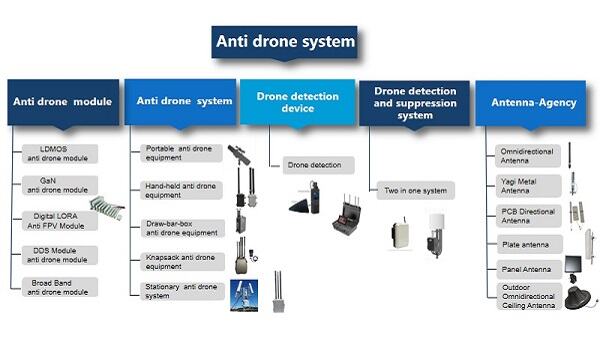
How Drone Jammers Block UAV Communication: RF, GPS, and Video Feed Interference
Disrupting RF and GNSS Signals: The Core Mechanism Behind Drone Jammer Functionality
Drone jammers work by sending out strong radio signals that mess up the communication channels drones rely on. They basically overwhelm those important 2.4GHz and 5.8GHz bands where most remote controls operate. At the same time, these devices also block satellite navigation signals including GPS and Galileo. When both of these things happen together, it cuts off the connection between the drone and its operator while also making it impossible for the drone to know exactly where it is. As a result, most drones will either land automatically or just hover there without knowing what to do next. Most modern jammer systems can stop consumer grade drones within about 80 to maybe even 150 meters away when conditions are good enough. They accomplish this using antennas that spread the signal all around and have settings to adjust how strong the interference actually is.
Blocking GPS and Remote Control Links to Disable Autonomous and Manual Drone Operations
Jammers disrupt both autonomous navigation and manual control by targeting critical vulnerabilities:
- Autonomous drones: GPS jamming at 1.575GHz disrupts waypoint navigation and “return-to-home” functions
-
Manual control: Interference at 433MHz/915MHz breaks analog command links commonly used in professional UAVs
Field tests in 2023 showed that simultaneous jamming of GPS and control signals caused 94% of tested drones to land immediately or hover aimlessly. However, models equipped with frequency-hopping spread spectrum (FHSS) technology reduced jammer effectiveness by 22%, underscoring the need for adaptive countermeasures.
Interfering with FPV and Live Video Transmission to Cut Pilot Situational Awareness
The first person view (FPV) systems along with telemetry data typically work on 5.8GHz frequency ranges, which makes them vulnerable to specialized video jamming techniques. When these frequencies get flooded with electromagnetic interference, the live video feed gets distorted or completely cut off something absolutely critical when controlling a drone mid-flight. According to tests run by defense companies, around two thirds of pilots end up having to call off their missions within just over a minute if their video connection goes down. There are even sophisticated jammers out there that copy genuine emergency signals, basically fooling drones into thinking they need to land right away. On the brighter side though, modern FPV drones equipped with digital encryption seem to handle these attacks better than older models. Industry reports suggest they offer roughly forty percent more protection against such interference compared to traditional analog systems, although this advantage might diminish as jamming technology continues evolving.
Key Factors Influencing the Effectiveness and Reliability of Drone Jammers
Compatibility with Common Drone Frequency Bands (2.4GHz, 5.8GHz, 915MHz, 433MHz)
To effectively jam signals, equipment needs to cover those main UAV communication frequencies. Consumer grade drones typically operate using 2.4GHz for controls and 5.8GHz for transmitting video feeds. Industrial strength models tend to go with lower frequencies like 915MHz or even 433MHz when longer ranges are needed. Research published last year about drone countermeasures showed something interesting - gadgets that only target single frequency bands couldn't stop nearly half (around 41%) of today's drones from operating. This makes it pretty clear why having wide spectrum coverage matters so much in real world applications.
Environmental Challenges: Obstacles, Weather, and Signal Reflection in Urban vs. Rural Areas
How well jamming works depends a lot on where it happens. Cities present big challenges because all those buildings bounce signals around and block them too. The effective range drops maybe somewhere between half to two thirds what it would be in an open field. Out in rural areas things look different. Moist air at certain frequencies, like that 5.8GHz band when humidity is high, just eats up the signal over distance. Getting a clear line of sight matters a ton. Any trees, hills or structures in the way will mess with how far the signal goes and how strong it stays throughout.
Drone Anti-Jamming Features Like Frequency Hopping and Encrypted Communication Protocols
The latest drones use something called frequency hopping spread spectrum technology, which lets them switch between different radio channels as fast as 1,600 times every single second. This makes it really hard for anyone trying to interfere with their signals. According to the 2024 Counter Drone Tech Report, about 78 percent of professional quality unmanned aerial vehicles come equipped with AES 256 encryption these days. That means signal jammers have to crack this security code first before they can even attempt to cut off communications. Because of all these advancements, simple jamming methods just don't work on modern drone models anymore.
Jammer Power Output, Antenna Design, and Line-of-Sight Requirements for Optimal Performance
| Factor | Minimum Requirement | Performance Impact |
|---|---|---|
| Power | 10W (portable) / 50W (fixed) | +300% range at 50W |
| Antenna Gain | 8dBi directional | Focuses energy on threat vector |
| Line-of-Sight | Unobstructed 90° arc | Reduces multipath interference by 75% |
High-gain directional antennas enhance targeting precision but require skilled operation. Omnidirectional variants offer 360° coverage at the cost of 40% reduced peak efficiency.
Portable vs. Stationary Drone Jamming Systems: Performance and Operational Trade-offs
Portable jammers: Mobility advantages versus limited range and battery life
Mobile jamming devices can be deployed quickly at security events, checkpoint locations, or wherever temporary coverage is needed. Most models come with compact bodies packed with lithium ion batteries rated around 5000 mAh or so, giving roughly an hour and a half of operation before needing recharge. The buttons are easy enough to press even for folks not tech savvy, but these little gadgets do have limits. Battery power runs down fast and heat builds up when used outside in really hot or cold weather conditions. They work pretty well within about 100 to 300 meters radius, making them good choices for individual protection scenarios or securing smaller areas during special events. Prices tend to stay below five grand, which makes sense for organizations looking for something affordable over the short term according to Autelpilot's latest report from last year.
Stationary systems: Sustained coverage and higher power for critical infrastructure protection
Stationary jammer systems typically run on amplifiers ranging from about 50 to 100 watts, paired with directional antennas that can cover areas up to around 1 or 2 kilometers in radius. These units are built for long term deployment at critical locations such as airfields, nuclear facilities, and federal buildings where constant signal suppression matters most. The hardware comes in tough cases rated IP67 against dirt and moisture ingress, which means they'll keep working even after getting rained on or exposed to dusty conditions. What makes them really effective though is their ability to connect with existing radar systems or radio frequency monitoring networks, allowing operators to automatically detect and respond to potential threats without manual intervention.
| Feature | Portable Jammers | Stationary Systems |
|---|---|---|
| Power Output | 5-20W | 50-100W |
| Effective Range | 100-300 meters | 1-2 kilometers |
| Deployment Time | <60 seconds | Permanent installation |
| Ideal Use Case | Mobile security teams | Critical infrastructure |
Limitations and Legal Challenges of Using Drone Jammers in Civilian and Commercial Settings
Unintended interference with Wi-Fi, cellular networks, and other RF-dependent systems
Drones jammers basically flood the airwaves with all sorts of interference signals which messes up other wireless stuff around them. According to research published last year, about 40 percent of these jamming events ended up knocking out important things like internet connected gadgets, heart rate monitors used in hospitals, and even emergency radio communications because they share the same frequencies. Take for example when someone tries to block a drone flying at 2.4GHz - this same frequency is what many hospital monitoring systems rely on too. What happens next? Well, doctors lose track of patients' vital signs right when they need it most. And let's face it, nobody wants their life hanging in the balance just because some guy wanted to stop his neighbor's quadcopter from buzzing over the backyard. These kinds of unintended consequences create major problems for public safety officials dealing with crowded urban environments where multiple technologies coexist.
Regulatory restrictions on jammer use in civilian airspace (FCC, FAA, and international laws)
The FCC in the United States has made it illegal for regular folks to own or use signal jammers since way back in 1934 under their Communications Act. If caught, people face serious consequences like paying fines as high as twenty grand or even facing jail time. Other countries aren't much different either. The European Union put similar restrictions into place through their Electronic Communications Code, while Japan handles it via their Radio Law. Both sets of rules basically say only military personnel and police can legally operate these devices. Why all this fuss? Well, there's real concern about airplane safety. Imagine what could happen if someone accidentally blocks signals used by planes for navigation or communication during flight. That kind of interference could lead to disasters nobody wants.
Effectiveness gaps against advanced drones using adaptive or encrypted communication
These days both commercial and military drones are starting to include anti-jamming tech like frequency hopping spread spectrum (FHSS) and AES-256 encryption, which makes regular jamming gear much less effective. According to a recent survey from 2024 among various security organizations, around two thirds of them had real trouble stopping drones equipped with these kinds of protections. The situation gets even trickier when looking at military grade UAVs. These advanced drones use things like laser communication systems and artificial intelligence for evading threats, so they need something called multi-broadcast jamming to be stopped. Unfortunately most civilian systems don't have access to this kind of capability, making it really hard to deal with sophisticated drone operations.
Ethical and operational risks of deploying jammers without detection or mitigation layers
The problem with blind jamming is that it creates both ethical issues and operational risks because these systems can't tell the difference between bad guys flying around and good ones doing important work like saving lives during search missions or delivering medicine to remote areas. When someone turns on jamming without proper authorization, they might be breaking aviation security rules too. Operators could find themselves facing serious legal trouble if a jammed drone crashes into something or hurts people. That's why most experts recommend taking a multi-layered approach first. Before hitting the jam button, operators should scan radio frequencies and use radar to spot what's actually out there. This way, they only take action when absolutely necessary and avoid causing unintended harm.
FAQs
What is the primary function of a drone jammer?
A drone jammer emits powerful radio signals to disrupt the communication channels drones rely on, leading to loss of control and navigation capabilities.
Can drone jammers affect devices other than drones?
Yes, drone jammers can inadvertently interfere with other RF-dependent systems like Wi-Fi, cellular networks, and medical monitoring devices.
Are civilian use of drone jammers legal?
No, in the U.S. and many other countries, private ownership or use of drone jammers is illegal due to potential risks and regulatory restrictions.
How do advanced drones counteract jamming attempts?
Advanced drones may employ techniques like frequency hopping and encrypted communication to reduce the effectiveness of jammers.
Table of Contents
- How Drone Jammers Block UAV Communication: RF, GPS, and Video Feed Interference
-
Key Factors Influencing the Effectiveness and Reliability of Drone Jammers
- Compatibility with Common Drone Frequency Bands (2.4GHz, 5.8GHz, 915MHz, 433MHz)
- Environmental Challenges: Obstacles, Weather, and Signal Reflection in Urban vs. Rural Areas
- Drone Anti-Jamming Features Like Frequency Hopping and Encrypted Communication Protocols
- Jammer Power Output, Antenna Design, and Line-of-Sight Requirements for Optimal Performance
- Portable vs. Stationary Drone Jamming Systems: Performance and Operational Trade-offs
-
Limitations and Legal Challenges of Using Drone Jammers in Civilian and Commercial Settings
- Unintended interference with Wi-Fi, cellular networks, and other RF-dependent systems
- Regulatory restrictions on jammer use in civilian airspace (FCC, FAA, and international laws)
- Effectiveness gaps against advanced drones using adaptive or encrypted communication
- Ethical and operational risks of deploying jammers without detection or mitigation layers
- FAQs