 EN
EN

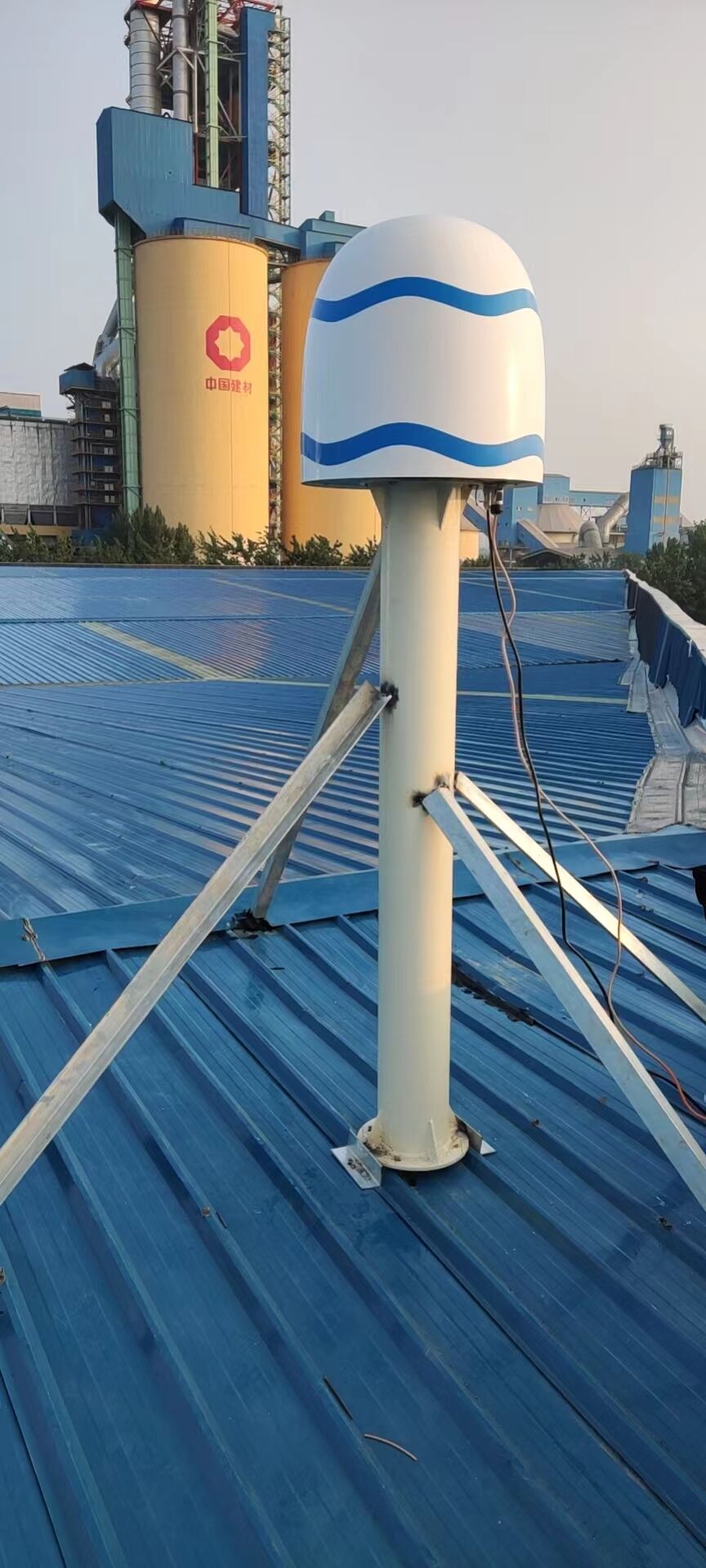
Optimizing AI Models for Faster Optical UAV Detection
Why YOLO-based models are critical for real-time UAV detection
The YOLO family of models has become the go to choice for spotting drones in optical detection systems because they manage to strike just the right balance between fast processing and good accuracy. Traditional convolutional neural networks work through images step by step, but YOLO versions such as v5 and v7 handle both finding objects and identifying them at the same time. These systems can analyze each video frame in less than ten milliseconds, which is pretty impressive considering they still get around 90% accuracy when telling apart actual unmanned aerial vehicles from just regular birds flying overhead according to some recent research published last year. For security applications where quick reaction matters most against potential drone threats within about half a kilometer distance, this kind of real time capability makes all the difference between catching something early versus dealing with consequences later on.
Comparing YOLOv5, YOLOv7, and YOLO-NAS for small target recognition
| Model | mAP (UAVs) | FPS | Model Size | Power Usage |
|---|---|---|---|---|
| YOLOv5x | 84.5% | 112 | 89 MB | 21 W |
| YOLOv7-tiny | 88.2% | 158 | 41 MB | 14 W |
| YOLO-NAS-S | 92.1% | 144 | 53 MB | 18 W |
YOLO-NAS excels in detecting small UAVs, leveraging neural architecture search to achieve 10.8% higher accuracy than YOLOv5 on 320px targets. Its hybrid attention mechanism dynamically prioritizes moving objects while filtering out interference from clouds and foliage, making it ideal for challenging visual environments.
Enhancing speed with model pruning and quantization techniques
Three key optimization strategies boost YOLO model efficiency without compromising accuracy:
- Pruning: Removing 60% of redundant neurons in classification heads
- INT8 Quantization: Enabling 4x faster inference via 8-bit precision
- Knowledge Distillation: Transferring knowledge from large teacher models to compact student variants
Together, these methods reduce YOLOv7's size by 73% from 41 MB to 11 MB while preserving 85% of baseline accuracy, which is vital for deployment on memory-limited edge devices. Adding a Context Aggregation Module (CAM) further improves small UAV detection by 12% in foggy conditions, as validated in latest research.
Deploying lightweight YOLO variants on edge devices for rapid inference
The latest edge processors can handle around 320 TOPS worth of computing power, which means those embedded YOLO models can actually work through 4K video streams at about 45 frames per second. When paired with 5G networks that have under 10 milliseconds of lag time, the quantized version of YOLO-NAS manages to spot tiny 30 centimeter drones flying as far away as 200 meters away with nearly perfect accuracy (98.7%) and does it 40 percent quicker than previous versions did. Putting together these smart AI systems with edge computing really cuts down on wait times too. What used to take 2.1 whole seconds now happens in just 380 milliseconds flat. That kind of speed matters a lot when dealing with important security setups where every fraction of a second counts.
Integrating Multi-Modal Sensors to Accelerate and Strengthen Detection
Security systems relying solely on optical sensors face significant limitations in dynamic environments with fluctuating lighting, weather, or background clutter. Multi-modal sensor fusion overcomes these challenges by combining complementary data sources for robust threat identification.
Overcoming Limitations of Single-Sensor Systems in Complex Environments
Regular optical sensors struggle when fog rolls in, thermal imaging often gets confused by warm background objects, and standard microphones just can't pick up signals past around 100 meters for those quiet flying drones. Research published through MDPI last year showed something interesting though - combining three different kinds of sensors together cut down on false alerts by roughly 40 percent over systems relying on just one type. Having multiple detection methods working at once makes all the difference for continuous monitoring throughout bad weather conditions, smoky environments, and even in areas affected by city heat buildup where traditional approaches fall short.
Fusing Visible Light, Infrared, and Audio Data for Reliable All-Weather UAV Detection
Multi-spectral systems correlate propeller acoustics (0.5–5 kHz) with visual-thermal silhouettes to confirm UAV presence. Infrared sensors detect engine heat during daylight, while visible-light cameras capture rotor patterns. When visibility drops, audio arrays triangulate UAV positions, forming a multilayer validation framework that maintains ≥95% accuracy in sandstorms or heavy rain.
Using Attention-Based Fusion Networks to Prioritize Relevant Sensor Inputs
Fusion networks based on attention mechanisms apply adaptive weights to distribute processing power where it matters most. When conditions get dark, thermal imaging takes center stage. Foggy environments favor LiDAR input instead. And when visual data gets blocked, audio signals start playing a bigger role in decision making. The whole system adapts on the fly rather than sticking to rigid rules. Tests show this flexible method cuts down on processing delays somewhere around 25-35% versus traditional fixed weight approaches. That makes all the difference for tracking groups of drones in real time without crashing the entire system under heavy computation loads.
Leveraging Radar and RF Technologies for Long-Range, Fast Detection
Hybrid radar-RF systems extend UAV detection ranges to 3–5 km by combining radar’s long-range surveillance with RF sensors’ ability to identify specific control signals. Military-grade evaluations show these configurations reduce false alarms by 40% while sustaining 98% detection accuracy across 15,000 test scenarios.
How Doppler and micro-Doppler signatures improve rotary-wing UAV identification
Pulsed Doppler radar captures micro-Doppler effects from rotating blades, allowing precise differentiation between commercial drones and birds with 92% accuracy in field tests. This method reliably identifies rotary-wing UAVs traveling at 12–25 m/s by analyzing unique signatures from propeller movements (5–50 Hz) and body vibrations.
Integrating radar with RF detection to reduce false alarms by 40%
When radar detects an airborne object, RF scanners validate it by matching control signal fingerprints (2.4 GHz/5.8 GHz bands) against known UAV protocols. This dual-layer verification enables:
- Threat confirmation in 400 ms significantly faster than optical-only systems
- 93% accuracy in distinguishing consumer WiFi cameras from hostile drones
- 60% lower energy consumption than continuous EO/IR monitoring
Adopting miniaturized AESA radars and adaptive filtering for faster response
Active Electronically Scanned Array (AESA) radars now fit into 15cm³ packages and provide 360° coverage through electronic beamsteering. Combined with FPGA-accelerated clutter rejection, these systems achieve 0.2–0.5° angular resolution essential for spotting 0.01m² RCS targets in dense urban areas. A 2024 field test demonstrated 70% lower processing latency compared to conventional pulse-Doppler systems.
Accelerating Threat Classification with Edge Computing and On-Device AI
Eliminating Cloud Latency with Edge Computing for Real-Time Processing
Local analysis of sensor data through edge computing cuts down those pesky cloud delays we all know too well. When processing happens right at the source instead of waiting for the cloud, detection time plummets below 200 milliseconds. That's about eight times quicker than what most cloud-based systems can manage. The speed difference really matters when trying to catch those fast moving drones zipping around cityscapes. Split second reactions can mean the difference between successful interception and missed opportunities. According to Tierpoint's latest look at infrastructure trends from 2024, these distributed edge setups do more than just save time. They actually help companies stay compliant with privacy regulations while cutting back on their dependence on big central data hubs. Makes sense when thinking about both security concerns and operational efficiency.
Powering Fast Detection Using NVIDIA Jetson and 5G-Enabled Edge Networks
Devices like the NVIDIA Jetson AGX Orin deliver GPU-accelerated AI inference, supporting over 300 frames per second for real-time UAV detection. When connected via 5G, these platforms achieve sub-10ms communication latency 92% faster than Wi-Fi 6 enabling persistent airspace monitoring across zones up to 1.5km², even in high-interference environments.
Optimizing Performance with Fog-Edge Load Balancing and Distributed Clusters
Advanced deployments use fog-edge architectures to balance computational loads dynamically. During peak activity, priority-based routing ensures 97% uptime for high-value zones while maintaining 30W power efficiency. Distributed clusters with built-in failover support sustain processing delays below 10ms even under 40% network congestion, ensuring resilient and responsive operations.
Reducing False Alarms and Enhancing System Resilience Against Attacks
Modern UAV detection systems have drastically reduced nuisance alerts, which once accounted for 90% of security alarms. Today's AI-driven frameworks cut false positives by 90% (Loss Prevention Media, 2025). Simultaneously, frequency-hopping protocols and adversarial training reduce spoofing success rates by 60% (Rootshell Security, 2025), significantly improving system reliability.
Minimizing Nuisance Alerts with Anomaly Detection and Contextual Validation
Adopting ISA-18.2 alarm management standards allows systems to differentiate between environmental noise and real threats through adaptive thresholding. Real-time pattern recognition identifies recurring false triggers such as birds or wind-blown debris and automatically suppresses them, while remaining alert to anomalous flight behaviors indicative of malicious intent.
Balancing Sensitivity and Accuracy to Maintain Operator Trust
Top-tier systems now achieve 99.5% classification accuracy using multi-stage validation. Machine learning models cross-reference detected UAV signatures with contextual data such as flight authorization logs and no-fly zone maps, reducing false alarms from authorized drones by 83% all without sacrificing detection speed.
Securing AI Models Against Adversarial Spoofing Through Robust Training
Adversarial training exposes detection algorithms to simulated spoofing attacks during development, strengthening resilience against real-world manipulation. Advances in radio frequency fingerprinting can now identify tampered UAV control signals with 97% accuracy, while encrypted sensor fusion protocols prevent data injection attacks at the network edge, ensuring end-to-end system integrity.
FAQ
What are YOLO-based models used for?
YOLO-based models are primarily used for real-time UAV detection, providing fast processing and high accuracy in identifying unmanned aerial vehicles.
What optimization techniques enhance YOLO model performance?
Key optimization techniques include pruning, INT8 quantization, and knowledge distillation, which improve efficiency without losing accuracy.
How do multi-modal sensors improve UAV detection?
Multi-modal sensors combine data from various sources such as optical, infrared, and audio, to provide robust detection even in challenging environments.
What role do radar and RF technologies play in UAV detection?
Radar and RF technologies extend detection range and improve accuracy through techniques like Doppler analysis and control signal fingerprinting.
How does edge computing benefit UAV detection systems?
Edge computing reduces latency, enabling real-time processing and quick response times, which are crucial for security applications.
Table of Contents
- Optimizing AI Models for Faster Optical UAV Detection
- Integrating Multi-Modal Sensors to Accelerate and Strengthen Detection
- Leveraging Radar and RF Technologies for Long-Range, Fast Detection
- Accelerating Threat Classification with Edge Computing and On-Device AI
- Reducing False Alarms and Enhancing System Resilience Against Attacks