 EN
EN

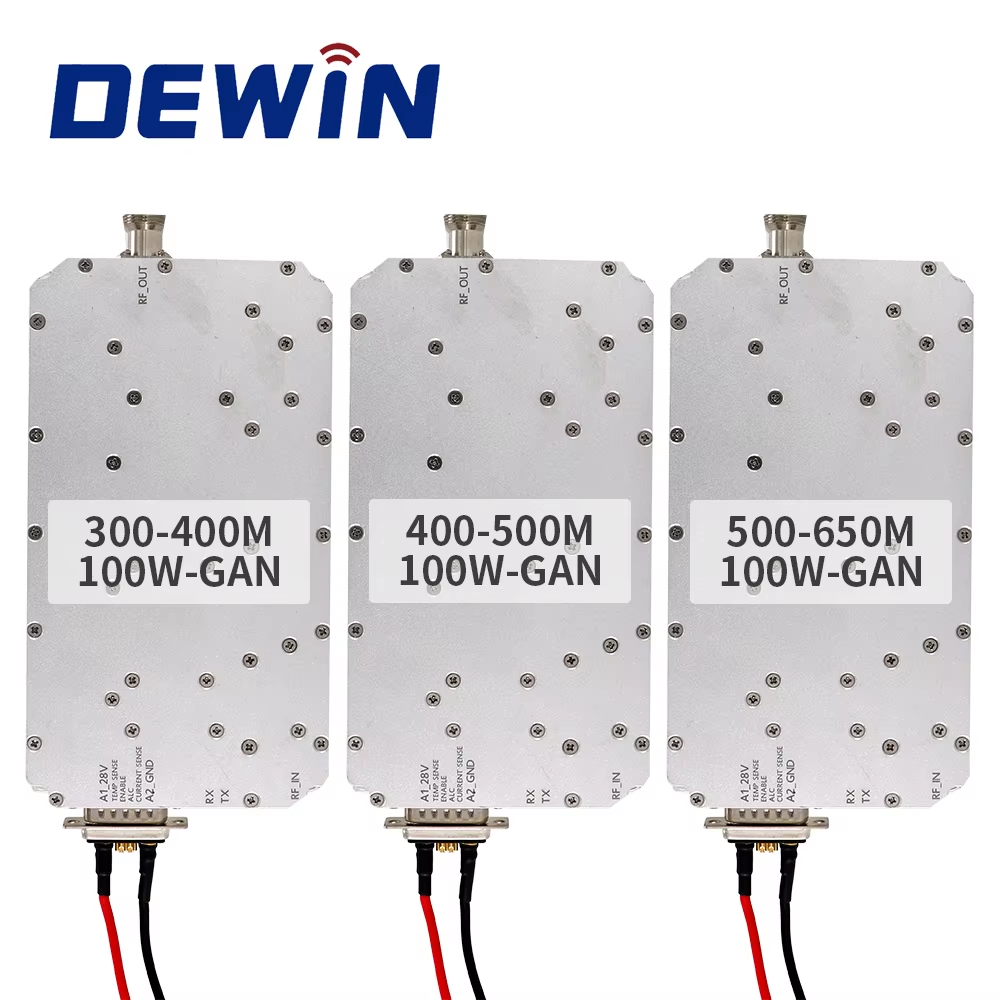
The Critical Role of RF Power Amplifiers in Advanced Signal Jammers
Modern electronic defense and communication security systems rely heavily on the sophistication of RF signal jammers. At the heart of these complex devices lies a critical, yet often underappreciated component: the Radio Frequency (RF) Power Amplifier. Without a high-performance RF power amplifier, a signal jammer is effectively reduced to a mere signal generator with no operational reach or efficacy. Understanding the fundamental function, technical nuances, and strategic importance of this component is essential for engineers, procurement specialists, and security professionals who are deeply involved in the domains of electronic warfare, drone defense, and signal mitigation. This article explores how these amplifiers serve as the backbone of jamming technology and why their quality is the ultimate arbiter of system performance.
Translating Low Power into Effective Interference
The fundamental purpose of an RF power amplifier within a signal jammer is to elevate low-power input signals to power levels capable of disrupting targeted communications across specified frequency bands. Inside a sophisticated jammer, a signal synthesizer or exciter creates the exact jamming frequency required for the mission. However, this initial output is typically in the milliwatt range—a level far too weak to overcome environmental background noise, signal path loss, or the significant distance between the jammer and the target. The power amplifier acts as the vital bridge, boosting this raw input to tens, hundreds, or even higher wattage levels.
This amplification process is not simply about raw power; it requires extreme precision to maintain the spectral integrity of the jamming signal. If the amplifier introduces non-linearities or signal distortion, the jammer’s effectiveness against targeted communication protocols is severely compromised. When the amplification is engineered correctly, the jammer achieves its objective with maximum efficiency and minimal power dissipation. This precision ensures that the interference is sharp and focused, preventing collateral damage to neighboring frequencies while maximizing the "kill zone" or protection radius of the device.
Technical Superiority and Material Innovation
The evolution of RF power amplifiers has been dramatically accelerated by recent advancements in semiconductor material science, particularly the industry-wide shift toward Gallium Nitride (GaN) technology. Zhuhai Dewin has consistently leveraged these high-efficiency materials to push the boundaries of what modern jamming modules can achieve in real-world scenarios. GaN transistors are fundamentally superior to traditional silicon-based solutions, offering significantly higher power density, better thermal management characteristics, and increased operational efficiency.
For professional-grade jamming equipment, these material characteristics translate into more compact, durable, and highly reliable modules that are easier to integrate into portable or vehicle-mounted defense platforms. Utilizing cutting-edge semiconductor materials allows for much broader bandwidth coverage. In practice, this means a single, well-engineered amplifier module can address a diverse array of frequency threats simultaneously, such as those found in complex drone communication links or GNSS signals. This adaptability reduces the overall physical footprint and energy consumption of the jamming system, which is a major advantage for tactical field deployments where size, weight, and power (SWaP) constraints are always a primary concern.
Performance Metrics in Real-World Operations
In actual field operations, the reliability of a signal jammer often boils down to two critical factors: thermal stability and operational linearity. Experienced engineers recognize that transmitting at high power levels inevitably generates substantial heat. If an amplifier module cannot dissipate this thermal energy efficiently, the system's performance will degrade rapidly, leading to signal instability, frequency drift, or, in extreme cases, total component failure. Zhuhai Dewin places an immense emphasis on rigorous thermal design, circuit board layout optimization, and extensive load testing to ensure that every module performs with perfect consistency, even under the most demanding environmental conditions.
Whether the application involves protecting critical infrastructure, securing high-value communication perimeters, or mitigating drone threats, the consistency of the power output directly dictates the effective jamming radius. A high-quality amplifier ensures that the generated signal remains robust, stable, and accurate throughout the entire mission duration, maintaining the integrity of the security perimeter without the need for constant recalibration. This level of reliability is what separates mission-critical defense hardware from consumer-grade alternatives.
Commercial Value and Strategic Supply Chain
Investing in high-end RF power amplifier modules offers significant commercial and long-term strategic advantages for system integrators and defense contractors. Beyond the raw technical specifications, professional manufacturers offer a reliable supply chain, guaranteed component consistency, and comprehensive technical support—elements often missing from generic or low-cost, off-the-shelf components. When companies partner with specialists like Zhuhai Dewin, they gain access to customized solutions specifically tailored to their unique frequency bands, output power needs, and integration constraints.
This level of professional customization significantly reduces the total system development cycle, lowers integration complexity, and diminishes long-term maintenance overhead. For large-scale defense and security companies, relying on a trusted, highly capable supply chain partner ensures that their end products consistently meet the most stringent industry standards. It provides their own end-users with the necessary assurance that the systems they deploy will perform flawlessly when facing the unpredictable challenges of modern electronic environments. This partnership approach is essential for brand building and maintaining a reputation for reliability in the competitive defense market.
Looking Ahead in Electronic Warfare Technology
As wireless threats continue to evolve, the demand for increasingly sophisticated, adaptive, and intelligent jamming technology is rising exponentially. The future of RF power amplifiers lies in even greater integration, higher power-added efficiency, and smarter, software-defined capabilities that allow for dynamic frequency hopping. Zhuhai Dewin remains at the absolute forefront of this technological evolution, focusing heavily on enhancing module agility to respond to fast-changing signal environments in real-time.
As the technology continues to mature, the synergy between hardware engineering excellence and advanced operational intelligence will continue to redefine the global landscape of electronic counter-measures. Choosing the correct components today is not just a decision based on immediate performance requirements; it is a strategic choice focused on future-proofing systems against the unknown challenges of tomorrow’s electromagnetic landscape. By prioritizing advanced amplification technology, stakeholders can ensure their security solutions remain resilient, effective, and ahead of the curve.