 EN
EN

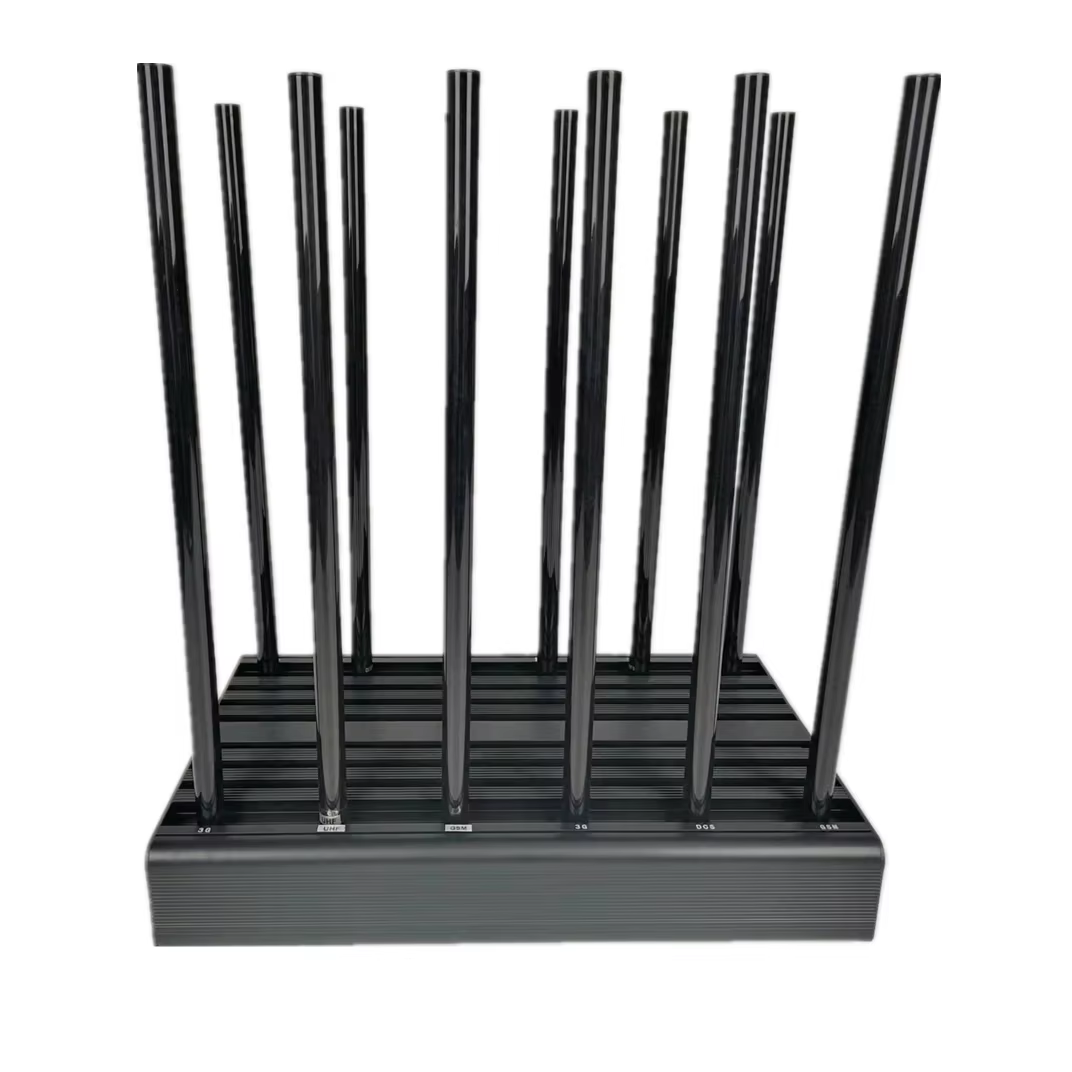
Decoding the Fundamental Mechanics of Signal Jammers
In an era dominated by ubiquitous wireless connectivity, the ability to control the electromagnetic spectrum has become a cornerstone of modern security infrastructure. A signal jammer functions by intentionally transmitting radio frequency (RF) signals that counteract or override authorized communications within a defined area. By flooding a target frequency with high-level noise or specialized interference patterns, these devices effectively mask legitimate signals, rendering communication impossible for receivers within the effective range. While the concept may appear straightforward, the operational success of a jammer depends on the precise synchronization of frequency, power, and modulation, turning a basic electronic concept into a highly sophisticated tool for critical infrastructure protection, border security, and perimeter defense. Understanding these mechanics is essential for professionals navigating the complex landscape of electronic countermeasures.
The Science of Frequency Interference and Synthesis
The core working principle of a signal jammer lies in its ability to match the frequency of a target communication device with absolute precision. Every wireless communication standard—whether cellular networks, Wi-Fi, Bluetooth, or satellite links—operates on specific, allocated frequency bands. A jammer utilizes a complex signal synthesizer, typically controlled by a high-stability voltage-controlled oscillator (VCO) or a direct digital synthesizer (DDS), to generate an output that perfectly mimics the frequency parameters of the targeted communication link.
When the jammer's output matches the target's frequency and exceeds the signal strength of the legitimate transmission, the receiver is inevitably overwhelmed. This phenomenon is analogous to attempting to hear a faint whisper in the middle of a crowded, noisy stadium; the intense background noise effectively buries the intended message, making it undecipherable to the receiver. Advanced jamming systems used in professional security operations often go a step further by employing rapid sweep-jamming or sophisticated noise-burst techniques. These methods allow the device to disrupt multiple frequency bands simultaneously or hop between them at high speeds, ensuring that even modern, adaptive frequency-hopping communication systems face overwhelming and persistent interference challenges.
Achieving Spectral Precision Through Modulation
Not all signals are created equal, and effective electronic interference requires significantly more than just raw power. Modulation plays a pivotal role in the operational effectiveness of a modern jammer. By carefully analyzing the specific modulation patterns of target signals—whether they are frequency-modulated (FM), phase-shift keyed (PSK), or complex spread-spectrum signals—jamming systems can craft interference signals that are structurally and mathematically disruptive.
If a jammer can output a signal that is harmonically or modulation-aligned with the target, the disruption becomes far more efficient, requiring significantly less power to achieve a complete signal blackout. This level of technical sophistication is precisely what separates specialized, professional-grade defense hardware from rudimentary hobbyist tools. Precision in modulation ensures that the interference remains strictly localized and focused, effectively preventing the accidental or unnecessary disruption of neighboring, non-target communication networks. This localized precision is a critical consideration for ensuring legal and ethical compliance in sensitive security environments, such as airports, government buildings, or industrial manufacturing sites.
Power Amplification and Operational Range
The effective operational range of any signal jammer is fundamentally tethered to the efficiency and linearity of its RF power amplifier. An interference signal generated at the milliwatt level must be boosted significantly to overcome path loss, antenna gain limitations, and the inevitable environmental attenuation between the jammer and the target receiver. High-performance power amplifiers are responsible for scaling these low-power synthesis signals to the required wattage levels while maintaining strict signal linearity.
In demanding field conditions, the thermal management and power-added efficiency (PAE) of these amplifiers dictate whether a device can operate reliably for extended periods or if it will suffer from heat-induced degradation. Zhuhai Dewin incorporates advanced semiconductor technologies, such as Gallium Nitride (GaN) transistors, into its proprietary power amplification modules to achieve superior thermal stability and higher power density. This material choice ensures that the jamming radius remains consistent even under rigorous, high-duty-cycle environmental stress, providing the absolute reliability required for continuous 24/7 security operations in harsh climates.
Security Applications and Strategic Utility
Beyond the technical mechanics, the true value of signal jamming technology lies in its profound contribution to regional security and personnel safety. From protecting sensitive industrial manufacturing plants against unauthorized drone surveillance to securing government facilities from remote-triggered explosive threats, signal jammers act as an invisible, reliable electronic shield. In highly competitive industrial sectors, preventing wireless data exfiltration, industrial espionage, or unauthorized network access via rogue devices has become a major operational priority.
By actively controlling the local electromagnetic environment, organizations can create secure "quiet zones" where confidentiality is strictly maintained and high-value physical assets are protected from electronic interference or surveillance. The strategic, pre-emptive deployment of these systems serves as a proactive measure that mitigates catastrophic risks before they can manifest, effectively transforming the electromagnetic spectrum from a security vulnerability into a fully controllable organizational asset.
Trust, Quality, and Manufacturing Excellence
Reliability is the single most important factor when selecting equipment for electronic defense and security applications. The underlying complexity of jamming technology means that even subtle flaws in circuit design, board layout, or component selection can lead to system-wide failure at the most critical of moments. Zhuhai Dewin adheres to stringent, multi-stage manufacturing protocols, utilizing only high-grade components and implementing rigorous, real-world load testing methodologies to ensure every individual unit meets or exceeds international performance standards.
By focusing on industrial-grade supply chain management and a culture of continuous technical optimization, Zhuhai Dewin provides bespoke solutions that address the specific, evolving frequency challenges faced by global clients. This unwavering dedication to engineering excellence ensures that defense contractors, government agencies, and security firms receive equipment that is not only effective in theory but is also field-tested, battle-hardened, and fully ready for deployment in the most challenging and unpredictable operational scenarios encountered worldwide.