 EN
EN

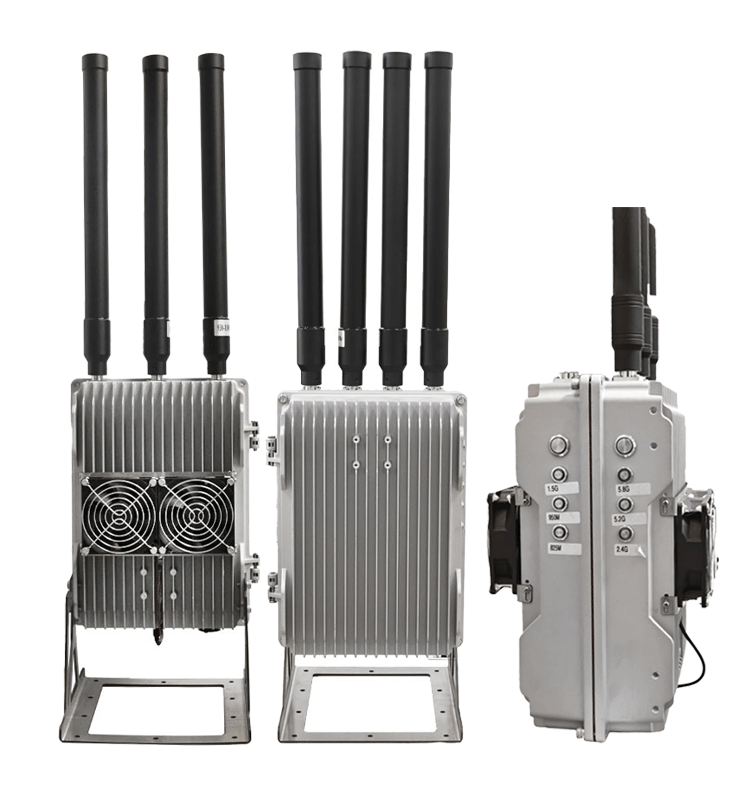
Legal Compliance: Understanding Drone Jammer Regulations by Jurisdiction
U.S. Federal Restrictions: FCC and FAA Prohibitions on Civilian Drone Jammers
In the United States, civilian use of drone jammers is strictly prohibited under federal law. The Federal Communications Commission (FCC) bans all signal-jamming devices under the Communications Act of 1934, classifying them as illegal interference with authorized radio communications. Simultaneously, the Federal Aviation Administration (FAA) prohibits actions that endanger aircraft safety—including disrupting drone navigation systems. Violators face severe penalties, including fines exceeding $100,000 per violation and potential imprisonment under 47 U.S.C. § 333.
Authorized Users Only: Military, Law Enforcement, and Critical Infrastructure Exceptions
Drone jammer deployment is legally restricted to specific entities operating under federal authorization. Military units may employ jammers during combat operations or base protection under DoD Directive 3020.40. Law enforcement agencies require case-specific warrants for counter-drone operations—such as neutralizing hostile surveillance during hostage situations. Critical infrastructure sites (e.g., airports, power plants) may obtain temporary FCC waivers during verified threats, as seen during a majority of major public events in 2023. All authorized users must comply with spectrum coordination protocols to avoid disrupting essential services like emergency communications or GPS navigation.
Technical Performance: Drone Jammer Range, Frequency Coverage, and Interference Efficacy
Essential Frequency Bands for Modern Drones (2.4 GHz, 5.8 GHz, GPS L1/L2)
Effective drone jammers must disrupt critical communication bands used by commercial UAVs. Most consumer drones operate on 2.4 GHz and 5.8 GHz frequencies for remote control and video transmission, while GPS L1/L2 bands enable navigation. Jammers targeting these frequencies can interrupt command signals and force drones into failsafe modes like hovering or returning to origin. Industry tests show that 92% of common drone models rely on these bands. Omitting any core frequency significantly reduces jamming efficacy—for example, neglecting GPS L1 allows drones with inertial navigation to continue operations.
Real-World Range vs. Advertised Specs: Impact of Terrain, Obstacles, and Drone Autonomy
Advertised maximum ranges (often 1–2 km) rarely reflect real-world performance. Urban environments with concrete structures can reduce effective distance by 40–60%, while dense foliage may decrease it further by 30%. Autonomous drones using AI-powered obstacle avoidance prove hardest to counter, as they can navigate without live signals. A 2023 field study found jammers achieved only 35% of claimed range in hilly terrain. Manufacturers typically test in open fields without interference, but real deployments face signal attenuation from buildings and weather, competing wireless networks (e.g., Wi-Fi congestion), and advanced drones switching to backup frequencies.
Operational Suitability: Portability, Power, and Deployment Flexibility of Drone Jammers
When evaluating drone jammers, operational suitability determines real-world effectiveness. Portable units—from compact handheld devices to vehicle-mounted systems—enable rapid deployment across diverse environments like urban settings or remote terrain. These prioritize battery efficiency, with optimized power consumption extending field operations while minimizing downtime. For stationary installations, AC/DC adaptors ensure uninterrupted protection. Deployment flexibility remains critical: modular designs allow integration of additional sensors or jamming modules as threats evolve, while weather-resistant casings (meeting IP67/IP68 standards) maintain functionality in extreme conditions like sandstorms or heavy rain. This adaptability ensures seamless transitions between temporary security operations and permanent infrastructure protection.
Risk Mitigation: Safety, Collateral Interference, and Ethical Implications of Drone Jammer Use
Unintended Disruption to Nearby Communications and Navigation Systems
Deploying a drone jammer risks disabling critical infrastructure beyond its target spectrum. These devices emit radio frequencies that disrupt essential services—including cellular networks, GPS navigation, and aviation communications—within their operational radius. Research indicates interference can extend 1.5 times beyond advertised ranges in urban environments due to signal reflection. Such disruptions cause tangible safety hazards: emergency responders may lose communication capabilities during crises, while aircraft could experience navigation errors. One documented hospital incident saw nearby jammer testing disrupt pagers and telemetry systems for 42 minutes. Operators must assess terrain and proximity to sensitive facilities before activation to prevent cascading system failures.
Ethical and Liability Considerations for Non-State Actors Using Drone Jammers
Private entities face complex ethical dilemmas when deploying counter-drone technology. Unauthorized jamming violates FCC regulations and carries penalties exceeding $100,000 per violation. Ethically, non-state users must consider proportionality—whether disruption outweighs potential threats—and unintended rights violations. Civilian drone operators conducting legal activities could suffer privacy breaches or equipment damage. Should jamming cause a drone crash resulting in injury or property damage, courts increasingly assign liability to the jammer operator under negligence doctrines. Businesses implementing such systems require rigorous legal review and documented threat assessments to justify use.
FAQs
Are civilians allowed to use drone jammers in the U.S.?
No, civilian use of drone jammers is strictly prohibited under federal law due to FCC and FAA regulations, which ban all signal-jamming devices and actions that endanger aircraft safety.
Who is authorized to use drone jammers?
Drone jammers may be deployed by military units, law enforcement agencies with specific warrants, and critical infrastructure operators with federal authorization or temporary FCC waivers.
What frequency bands do drone jammers target?
Drone jammers typically target 2.4 GHz and 5.8 GHz for remote control and video transmission, as well as GPS L1/L2 bands used for navigation.
Do drone jammers work as advertised in all environments?
No, real-world conditions such as concrete structures, foliage, and signal interference significantly reduce the effective range of drone jammers compared to their advertised specifications.
What are the risks associated with using drone jammers?
Risks include unintended disruption to nearby communications and navigation systems, ethical concerns, and potential legal liabilities for unauthorized or negligent use.
Table of Contents
- Legal Compliance: Understanding Drone Jammer Regulations by Jurisdiction
- Technical Performance: Drone Jammer Range, Frequency Coverage, and Interference Efficacy
- Operational Suitability: Portability, Power, and Deployment Flexibility of Drone Jammers
- Risk Mitigation: Safety, Collateral Interference, and Ethical Implications of Drone Jammer Use
- FAQs