 EN
EN

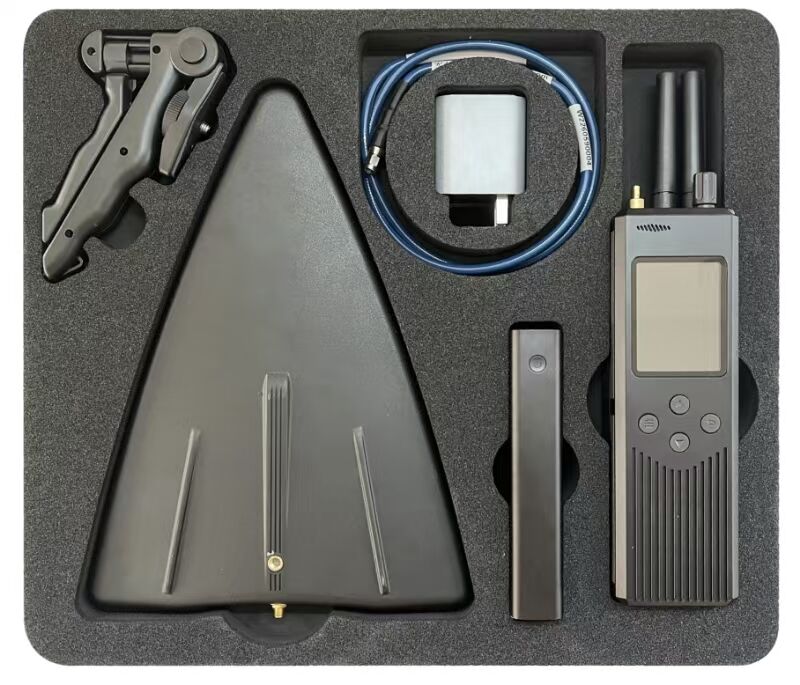
Understanding Drone Detector Accuracy in Real-World Urban Environments
Defining Accuracy in the Context of Drone Detection Systems
The accuracy of drone detectors basically comes down to how well they can spot actual unmanned aerial vehicles without falsely flagging birds flying overhead, weird weather patterns, or all the random electronic chatter that happens in cities every day. When looking at what makes these systems effective, three main factors stand out: how far away they can detect drones (usually somewhere between 1 and 5 kilometers with radio frequency sensors), how confident they are when identifying targets (most systems hit over 85% accuracy at places like power plants or airports), and how quickly they react once something suspicious shows up (ideally under five seconds so security teams can respond before any damage occurs). Real world testing tells a different story though. Labs give great results, but throw in all the signal bouncing around buildings in crowded urban areas and things get complicated fast. A recent study from last year showed that this kind of interference cuts down on successful identifications by roughly a third in really packed city spaces.
Key Factors Influencing Drone Detector Performance in Urban Settings
Three primary factors shape detection efficacy in cities:
- Sensor placement geometry: Strategic installation angles help mitigate signal blockage caused by buildings
- Environmental interference: Cellular towers and Wi-Fi networks generate RF noise floors exceeding -80 dBm, masking weaker FPV drone signals
- Drone specifications: Low-RCS (Radar Cross Section) designs and sub-500g micro-UAVs challenge traditional radar systems
A 2023 field study found that RF scanners detected only 61% of 5.8GHz analog FPV drones in urban areas compared to 92% in open terrain due to signal-to-noise ratio challenges (Urban Drone Detection Study).
The Gap Between Lab-Reported and Real-World Drone Detection Accuracy
Manufacturers often claim 95%+ accuracy under ideal lab conditions with unobstructed flight paths. However, data from 142 urban security teams reveals significant performance drops:
| Metric | Lab Performance | Real-World (Urban) | Performance Drop |
|---|---|---|---|
| Detection Range | 3.2 km | 1.1 km | 66% |
| Classification Speed | 2.1 seconds | 4.8 seconds | 129% |
| False Positive Rate | 2% | 19% | 850% |
This gap arises from unpredictable variables such as temporary construction sites emitting anomalous RF signatures. To close it, leading providers now advocate multi-sensor fusion combining RF analysis with AI-enhanced radar processing.
FPV UAV Signal Characteristics and Detection Challenges
How FPV drones use RF, cellular, and satellite links for control and video transmission
The majority of FPV drones depend on radio frequency links, mostly operating within the 2.4 GHz and 5.8 GHz ranges, to handle real time controls and stream video footage. Cheaper drone builds still stick with analog systems, whereas the higher end digital HD options have better encoders that can get latency down under 30 milliseconds. Some new models are starting to include cellular network connections for flying outside line of sight, but this feature has only caught on with around 12% of commercial FPV setups because of infrastructure issues according to Drone Defense Quarterly from last year. Satellite links are pretty uncommon these days and generally only used when missions need to cover distances exceeding 50 kilometers. The problem is satellites add noticeable lag time which makes them impractical for fast maneuvering flights where quick response matters most.
Signal characteristics that challenge RF-based detection of FPV UAVs
FPV systems employ three key signal traits that complicate detection:
- Low transmit power: 90% of analog FPV transmitters operate below 600 mW to avoid regulatory attention
- Frequency agility: 74% of racing drones automatically hop across more than 40 channels within the 5.8 GHz band
- Burst transmission: Digital systems compress video into data bursts under 4 ms
In cities, multipath interference further degrades RF signal-to-noise ratios by 60-80% compared to open areas (Urban Signal Propagation Study, 2024).
Low-power and frequency-hopping signals in FPV systems: Evasion tactics?
Most first person view (FPV) drones on the market today use low power systems under 1 watt along with frequency hopping spread spectrum technology, which helps them avoid detection. According to recent research published in early 2024, signal detectors miss these FHSS equipped drones far more often than expected. The false negative rate jumps all the way from just 5 percent up to as high as 43 percent in areas where radio frequencies are crowded and busy. There's definitely a downside though. These same stealth features come at a cost. Operators find their control range drops somewhere between 35 and even 60 percent, so there's always this balancing act going on between staying hidden and maintaining reliable control over the drone during operations.
Case Study: Analysis of 5.8 GHz analog FPV vs. digital HD systems (DJI O3, Walksnail)
| Characteristic | Analog FPV (5.8 GHz) | Digital HD Systems |
|---|---|---|
| Bandwidth Usage | 20-40 MHz | 10-20 MHz |
| Peak Power Output | 800 mW | 200 mW |
| Signal Duration | Continuous | Burst (1-4 ms) |
| Jamming Susceptibility | High | Moderate |
| Detector Avoidance Score | 62/100 | 78/100 |
Field tests show analog systems are detectable at distances 1.8x greater than digital equivalents, but digital HD’s intermittent signals evade 34% more automated detection algorithms.
Environmental and Operational Barriers to Detecting FPV Drones in Cities
Physical limitations of detecting low-RCS, low-altitude FPV drones
Today's FPV drones come with small frames under 50 cm across and are built using lightweight composites that cut down their radar signature by around two thirds to four fifths when compared against bigger commercial models. When these little birds fly under 50 meters altitude, they basically disappear into all the ground noise, so standard radar has trouble picking them out. The visual detection systems run into extra problems too because buildings, trees, and other structures get in the way pretty often. According to some recent signal analysis done last year, when FPV pilots keep their craft low and use natural landscape features as cover, they manage to slip past about three quarters of what most regular drone detectors can actually monitor.
Urban clutter and multipath interference degrading RF and radar detection
Urban areas have this really high background electromagnetic noise level, somewhere around 15 to 22 decibels, which makes it tough for those important FPV control signals at 2.4 GHz and 5.8 GHz to cut through properly. The concrete buildings everywhere create these multipath errors that can be over 40 meters long when trying to locate things via radio frequency. And let's not forget all the other wireless networks constantly hogging bandwidth space, taking up about 92% of what's actually available. Some folks did a study recently looking at how cities deal with drones, and they found something interactive: automated systems often get confused, mistaking real FPV video streams for regular old Wi-Fi or Bluetooth signals about one third of the time. This just goes to show why relying on only one type of sensor isn't going to work well enough in complex environments like our modern cities.
Speed and maneuverability of racing drones reducing detection windows
FPV racing drones are seriously fast machines capable of hitting speeds above 120 kilometers per hour and making sharp turns within just 100 milliseconds. That leaves operators with barely eight seconds to react before something happens. Most sensor systems take around 12 to 15 seconds to process information, which is way too slow when trying to track multiple drones at once. The detection software needs to crunch through more than 80 different factors all within three seconds if it wants to stay above 90% accurate in identifying targets. Unfortunately, this heavy workload causes problems in real world city environments where false negatives jump up by about 27%, making things even trickier for anyone trying to keep track of these tiny flying racers.
Advancing RF and Multi-Modal Detection for Improved Drone Identification
Principles of RF-based detection using spectrum monitoring
Most spectrum analyzers focus on monitoring frequencies within the 2.4 GHz to 5.8 GHz range since around three quarters of all FPV drones work in these bands. When looking at how these devices function, they basically examine things like modulation patterns and changes in signal strength to spot what makes each drone different from others. Research into radio frequency detection methods has actually shown that this kind of analysis forms the basis for many Remote ID regulations currently being implemented across various jurisdictions. Recent studies back this up too. One particular analysis conducted last year found that when combined with machine learning techniques, sensors could tell apart drone signals from regular city Wi-Fi about 94 times out of 100, which is pretty impressive considering how crowded our wireless environments have become.
Direction finding and geolocation accuracy in dense signal environments
Multipath propagation in cities degrades geolocation precision by 40-60%. Advanced systems use phased antenna arrays and time-difference-of-arrival (TDoA) algorithms, yet concrete obstructions can still create positional errors over 30 meters for low-power FPV signals.
Why reliance on a single detection method fails in complex areas
No single technology offers reliable urban drone detection: radar struggles with carbon-fiber frames, optical systems fail in poor visibility, and RF sensors cannot track radio-silent drones. Field tests confirm standalone systems miss 35% of incursions caught by multi-sensor arrays.
Synergy of RF, radar, and EO/IR systems for reliable drone detection
Integrating RF signal identification (90% specificity), radar ranging (up to 3 km), and electro-optical/infrared (EO/IR) confirmation reduces false alarms by 72%. Radar provides 360° surveillance, while EO/IR enables visual differentiation between drones and birds.
Trend: Networked RF sensors and data fusion for real-time tracking
Gridded RF sensor networks with edge computing achieve response latency under 500 ms. Centralized AI correlation of RF, radar, and thermal data improved trajectory prediction accuracy to 88% in 2023 field trials.
AI-Powered Visual Detection: YOLO Models and Field Performance
Role of Deep Learning in Enhancing Visual Identification of FPV Drones
For spotting FPV drones using electro optical or infrared sensors, deep learning techniques have proven indispensable. Take YOLOv7 and YOLOv8 for instance these architectures use something called Extended Efficient Layer Aggregation Networks, or E ELAN for short. According to research published in Nature last year, they manage to process images about 28 percent quicker than previous versions without dropping below 91% accuracy in tests. What makes them stand out is their ability to tell apart FPV drones from birds just by looking at how the rotors spin and picking up on those telltale signal patterns that regular birds simply don't produce. This capability matters a lot in real world scenarios where distinguishing between actual threats and innocent wildlife can save both time and resources during surveillance operations.
Performance of YOLO-Based Models in Real-Time Drone Detection from EO Feeds
Urban settings present particular challenges for drone detection, where YOLOv10 manages around 86% accuracy when spotting FPV drones under 150 meters altitude. However things get trickier up high, with detection rates dropping to just 63% as these small craft become harder to see against the sky. Some recent testing has revealed something interesting though - when we mix YOLO's computer vision with radar information, the number of false alerts drops by almost half, making those 41% fewer mistakes really stand out. And let's not forget about speed either. The system handles 4K footage pretty well actually, taking only 33 milliseconds per frame which is fast enough for most security applications that need immediate response times.
Training Challenges: Availability of Public Drone Datasets
The lack of diverse training data really gets in the way when trying to deploy these systems effectively. There are some datasets out there already, like DroneRF with around 15,000 RF samples and MultiDrone containing approximately 8,200 annotated EO images. But looking closer, we find that less than 12 percent actually cover those specific FPV situations everyone keeps talking about these days - things like sudden yaw changes during flight or dealing with all that pesky frequency hopping interference. Because of this gap, most developers end up creating roughly three quarters of their training data through simulation methods. And let's face it, this approach tends to skew models towards favoring those artificial scenarios instead of real world conditions they'll eventually encounter on the ground.
Controversy Analysis: Overfitting in Controlled Datasets vs. Field Robustness
When vision models get trained on carefully selected datasets, they usually hit over 90% accuracy in controlled lab settings. But throw them into actual city environments and their performance plummets to somewhere between 58% and 67%. Researchers from 2024 discovered something interesting about models built with VisioDect data - they tend to fixate too much on certain lighting conditions. The study showed a massive 29% decline in effectiveness during sunset hours compared to bright daylight scenarios. Many experts in the field point out that our current ways of testing these systems miss some pretty obvious tricks used by FPV operators. Things like special reflective materials on drones or unpredictable movement patterns completely bypass standard detection methods, which raises serious questions about how reliable these systems really are when deployed outside of test environments.
Frequently Asked Questions (FAQs)
- What are the main challenges for drone detection in urban environments? Urban environments present challenges such as signal interference caused by buildings, high RF noise floors from cellular towers and Wi-Fi networks, and limitations due to low-RCS drone designs.
- Why is the real-world accuracy of drone detectors lower than in lab settings? The real-world accuracy is affected by unpredictable variables like temporary construction sites emitting RF signatures and urban clutter leading to signal interference, which differs greatly from the controlled conditions in laboratory settings.
- How do FPV drones use RF signals? FPV drones typically use RF signals within the 2.4 GHz and 5.8 GHz ranges for real-time control and video transmission, although some may integrate cellular and satellite links for extended range operations.
- What makes FPV drones difficult to detect? FPV drones are difficult to detect due to low transmit power, frequency agility, and burst transmission. These traits enable better evasion in crowded RF environments.
Table of Contents
- Understanding Drone Detector Accuracy in Real-World Urban Environments
-
FPV UAV Signal Characteristics and Detection Challenges
- How FPV drones use RF, cellular, and satellite links for control and video transmission
- Signal characteristics that challenge RF-based detection of FPV UAVs
- Low-power and frequency-hopping signals in FPV systems: Evasion tactics?
- Case Study: Analysis of 5.8 GHz analog FPV vs. digital HD systems (DJI O3, Walksnail)
- Environmental and Operational Barriers to Detecting FPV Drones in Cities
-
Advancing RF and Multi-Modal Detection for Improved Drone Identification
- Principles of RF-based detection using spectrum monitoring
- Direction finding and geolocation accuracy in dense signal environments
- Why reliance on a single detection method fails in complex areas
- Synergy of RF, radar, and EO/IR systems for reliable drone detection
- Trend: Networked RF sensors and data fusion for real-time tracking
-
AI-Powered Visual Detection: YOLO Models and Field Performance
- Role of Deep Learning in Enhancing Visual Identification of FPV Drones
- Performance of YOLO-Based Models in Real-Time Drone Detection from EO Feeds
- Training Challenges: Availability of Public Drone Datasets
- Controversy Analysis: Overfitting in Controlled Datasets vs. Field Robustness
- Frequently Asked Questions (FAQs)