 EN
EN

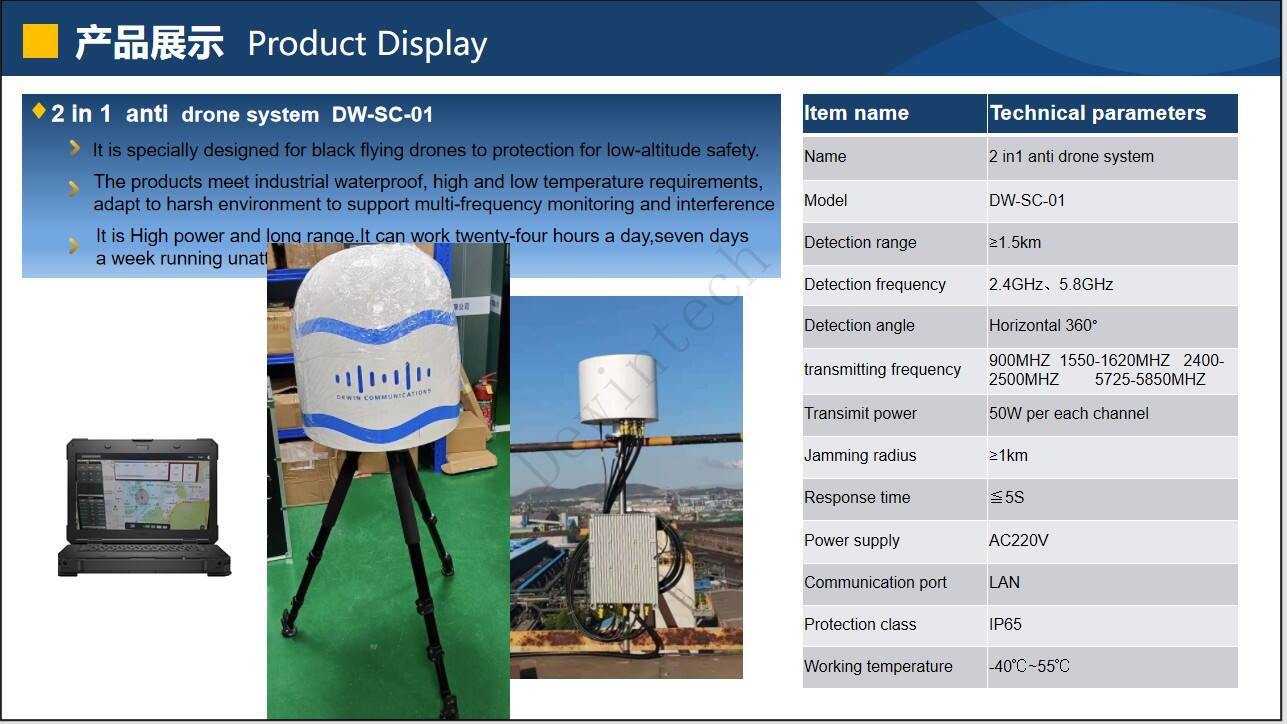
Understanding Anti-FPV Technology and How It Disrupts Drone Signals
What Is an Anti-FPV Antenna in Counter-Drone Systems?
Anti-FPV antennas play a key role in counter-drone tech by going after those pesky first person view drones through their communication channels. What these devices do basically is send out targeted radio interference at frequencies around 2.4 GHz and 5.8 GHz which happen to be where most FPV operators transmit both control signals and video feeds. Real world testing shows pretty impressive results too - about 95% of the time they can cut off drone signals completely within half a kilometer range just by drowning out whatever command the pilot is sending. The newer models come equipped with smart features that automatically tweak how strong the jamming signal needs to be depending on things like what kind of landscape we're dealing with, how strong the original signal is, and other environmental factors that might affect performance.
The Principle of Targeted Jamming for FPV Control and Video Links
When it comes to disrupting FPV drones, targeted jamming works by messing with the specific frequencies these devices use for sending commands and transmitting live video feeds. Anti-FPV systems differ from regular jammers because they employ directional antennas that focus their signal right where the drone is located, which helps cut down on accidental interference elsewhere. The thing is, most consumer grade and even many commercial drones depend on communication links that aren't encrypted at all, so they get knocked out pretty easily when hit with quick pulses of radio frequency noise. After being jammed, most drones will usually kick in their safety measures pretty fast too. They might hover there, drop straight down, or try to fly back to where they took off from within just a few seconds after losing contact.
How Anti-FPV Systems Block Real-Time Drone Video and Command Transmission
Modern anti-FPV systems work by disrupting communications in both directions at once. They block the signals going from pilot to drone as well as the video coming back from the drone to the operator. When these systems jam the 2.4 GHz control channel along with the 5.8 GHz video band, they basically cut off all communication between the device and its controller. The latest technology has gotten pretty smart though. Many current solutions use frequency hopping techniques that can actually follow and adapt to changing drone signals on the fly. This matters a lot because around three quarters of military grade drones today switch frequencies automatically to avoid being blocked by older jamming equipment. When both channels get disrupted, operators not only lose control but also their view of what's happening on the ground. That double whammy usually stops most threats dead in their tracks.
Frequency Ranges and Jamming Techniques Used Against FPV Drones
Common Frequency Bands Used by FPV Drones for Control and Video Streaming
Most FPV drones rely on either 2.4 GHz or 5.8 GHz frequency bands to send their video feed back to the pilot. Meanwhile, the controls that steer these little machines typically work at lower frequencies around 433 MHz, 900 MHz, or even 1.2 GHz. There's no perfect solution here though. The 5.8 GHz band gives us those nice HD videos we all want to see, but it doesn't travel far and gets blocked easily by walls and trees. On the flip side, frequencies like 900 MHz can reach much farther distances and handle obstacles better without losing signal strength. A recent study from the Counter-UAV Operations folks in 2023 found something interesting too. They looked at what happens when someone tries to jam an FPV drone's signal. Turns out, 78 percent of the time, security systems will go after that 5.8 GHz video link first because once pilots lose sight of what their drone is doing, they usually just give up and walk away from whatever mission they were trying to accomplish.
Broadband vs. Selective Jamming: Approaches to Disrupting FPV Signal Transmission
Counter-drone systems use two main jamming strategies:
- Broadband jamming floods wide frequency ranges (e.g., 2.3–5.8 GHz) with noise, offering wide coverage but consuming more power and increasing collateral interference
- Selective jamming targets specific channels–like 5.8 GHz Band 3 (5785–5815 MHz)–to disable video transmission efficiently
A 2024 Electronic Warfare Study found selective jamming reduces power consumption by 62% in urban environments compared to broadband methods. However, both approaches face limitations against frequency-hopping spread spectrum (FHSS) drones that switch channels up to 300 times per second.
Smart Jamming Technologies That Adapt to Drone Frequency Hopping
Countering those tricky FHSS enabled drones requires some pretty sophisticated tech these days. Advanced anti-FPV systems now use AI powered spectrum analyzers along with what they call adaptive cognitive jamming. Basically, this method spots the pattern of frequency hops as they happen and tries to guess where the next jump will be. The jammer then follows along without completely shutting down the signal, which keeps the drone from triggering its safety protocols too soon. A European defense company ran some tests last year and found their adaptive jammers disrupted around 89% of FHSS drones within 800 meters range. That's way better than old school broadband systems that barely hit 41%. Pretty impressive numbers when you think about it.
Real-World Effectiveness of Anti-FPV Equipment in Diverse Environments
Performance of Anti-FPV Systems in Urban vs. Open Terrain
Open areas tend to be much better for anti-FPV systems since they can disrupt signals around 70% of the time thanks to clear line of sight conditions, something confirmed by research from MIT Lincoln Lab back in 2023. Things get trickier in cities though where effectiveness drops down to somewhere between 40 and 55 percent. Why? Well, all those steel reinforced buildings and concrete walls just bounce around and soak up radio frequency energy instead of letting it pass through freely. Take 5.8 GHz jamming signals for example. When these signals hit city surfaces, they lose strength by about 8 to 12 decibels, which basically means they don't reach as far or work as reliably in dense urban settings compared to open spaces.
Case Study: Countering FPV Drones in Ukraine’s Electronic Warfare Operations
In the 2024 Donbas offensive, Ukrainian military sources claimed they managed to disable around 60 percent of enemy FPV drones with their mobile anti-drone systems. These defensive setups typically mixed wideband jamming equipment alongside frequency hopping technology to go after drones working on those specific radio frequencies - 1.2 to 1.3 GHz for control signals and 2.4 GHz for video feeds. Things got trickier though when dealing with Russian drones that used LoRa modulation at 915 MHz. Operators had to constantly update their firmware and keep an eye on the electromagnetic spectrum, which highlighted just how important flexible and rapidly adaptable electronic warfare strategies really are in modern combat situations.
Challenges and Misconceptions: Overestimated Range Due to Environmental Interference
Manufacturers often advertise effective ranges of up to 1.2 miles for anti-FPV equipment, but real-world performance typically falls 35–50% short in wooded or densely built areas (Defense Science Board, 2022). Key limiting factors include:
- RF interference: Nearby WiFi and LTE networks generate false positives and degrade detection accuracy
- Physical obstructions: Trees attenuate 2.4 GHz signals by 15–20 dB per kilometer
- Atmospheric conditions: Humidity and rising temperatures reduce 5.8 GHz jamming effectiveness by up to 12% per 10°C increase
These challenges highlight the importance of integrating anti-FPV systems with radar and RF detection layers for robust airspace protection.
Integrated Electronic Warfare Solutions for Comprehensive FPV Threat Mitigation
Modern Electronic Warfare (EW) systems mitigate FPV drone threats through layered detection and disruption capabilities. By combining passive sensing, active jamming, and intelligent adaptation, these platforms deliver reliable defense across dynamic electromagnetic environments.
Role of Electronic Warfare (EW) Systems in Detecting and Jamming FPV Drones
Contemporary EW platforms utilize a three-stage defense framework:
- Spectrum Monitoring Continuous scanning of 900 MHz, 1.2 GHz, 2.4 GHz, and 5.8 GHz bands commonly used by drones
- Behavioral Analysis Machine learning models distinguish FPV control signals from benign wireless traffic with 94% accuracy (2025 Electronic Warfare Market Report)
- Dynamic Suppression AI-controlled jammers apply 50W–200W of directional RF interference while minimizing impact on civilian communications
Recent analysis of AI-driven electronic attack systems shows cognitive EW platforms reduce response times from 12 seconds to just 800 milliseconds compared to legacy systems.
Combining RF Detection with Real-Time Signal Jamming in Mobile Counter-Drone Units
Proven mobile counter-FPV systems integrate the following components:
| Component | Function | Operational Impact |
|---|---|---|
| Software-Defined Radio | Simultaneous spectrum analysis & deception | Covers 20 MHz–6 GHz range |
| Adaptive Beamforming | Focused jamming within 15°–45° arc | Increases effective range by 3× |
| Edge Computing Module | Onsite signal processing | Reduces cloud dependency by 78% |
In military trials, portable units achieved 90% mission success against FPV swarms, though multipath propagation in cities remains a challenge. 2024 market projections indicate 63% of defense contractors now favor deployable anti-drone systems over fixed installations, driven by demand for rapid response and operational flexibility.
FAQ
What frequencies do FPV drones commonly use?
FPV drones typically utilize 2.4 GHz and 5.8 GHz bands for video transmission, while control signals may operate on lower frequencies such as 433 MHz, 900 MHz, or 1.2 GHz.
How effective are anti-FPV systems in urban environments?
Effectiveness of anti-FPV systems in urban settings drops to 40-55% due to obstacles like buildings that disrupt signal transmission, compared to 70% in open terrains.
What are the main challenges faced by counter-drone technologies?
Challenges include RF interference, physical obstructions like trees, and atmospheric conditions such as humidity affecting signal propagation.
How do selective jamming techniques compare to broadband jamming?
Selective jamming targets specific channels, reducing power consumption by 62% compared to broadband methods, though both face challenges against FHSS drones.
Why is cognitive jamming important for counter-drone operations?
Cognitive jamming adapts to frequency hopping, increasing effectiveness against FHSS drones, which frequently change transmitting frequencies.