 EN
EN

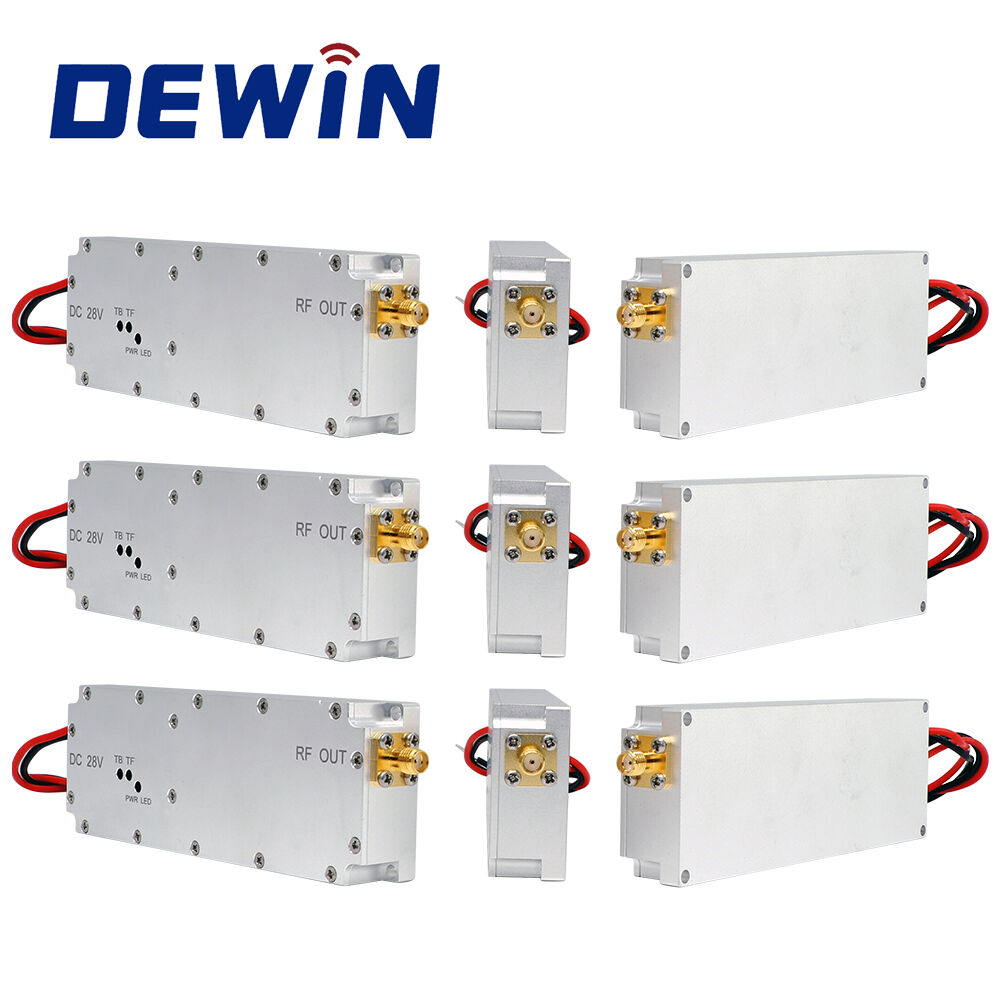
What Is a LoRa Anti-Drone Module and How Does It Work?
The LoRa anti-drone module works as a specialized radio frequency system designed to stop unauthorized drones from flying around restricted areas. It targets those pesky command and navigation signals that keep drones airborne. What makes this technology stand out? Well, it actually uses something called chirp spread spectrum modulation in the LoRaWAN protocol which gives it some serious staying power against interference. Traditional jammers just blast everything within range, but these modules are different. They can reach distances over five kilometers away while using very little power. And here's what's really cool about them - they only interfere with what needs to be stopped, so regular communication systems nearby aren't affected much at all. This kind of precision matters a lot when trying to secure sensitive locations without causing unnecessary disruptions elsewhere.
Core Architecture: Chirp Spread Spectrum and Adaptive Data Rate
What makes this module work so well is its use of CSS modulation, which basically encodes information through these linear frequency sweeps we call chirps over broad bandwidths. Paired with adaptive data rate algorithms, it constantly adjusts things like spreading factor, bandwidth settings, and transmission power depending on what the radio frequency environment throws at it right now. The combination of these two approaches gives the system a natural defense against those pesky issues like multipath fading and Doppler shifts that plague communications in tight urban spaces between buildings. And because of how efficiently it manages power consumption, operators get reliable long-term performance without draining batteries or wasting energy.
| Feature | Impact on Performance |
|---|---|
| Chirp Modulation | 30 dB processing gain vs. narrowband |
| ADR | 60% power reduction in clear channels |
Why LoRa Modulation Excels in Low-Power, Long-Range RF Disruption
The CSS waveform used in LoRa technology delivers impressive link budgets reaching around 157 dB even when dealing with very low signal-to-noise ratios down to -20 dB. This capability makes it possible to suppress drones effectively over distances exceeding 5 kilometers while operating at just 100 milliwatts power output. That's about ten times better efficiency compared to traditional OFDM based jamming solutions currently on the market. Another key advantage comes from its naturally low spectral density which makes these signals harder to detect, creating real challenges for anyone trying to develop countermeasures against them. What sets LoRa apart is how well it manages radio channels. The system maintains careful control that lets it work alongside both licensed and unlicensed LoRaWAN networks such as those found in smart water meters across cities. This means there's much less risk of causing accidental interference problems in areas where many different wireless signals are already competing for space on the radio spectrum.
Precision Jamming: How LoRa Anti-Drone Modules Achieve Targeted Signal Suppression
Frequency Agility and Narrowband Interference Focusing on Drone Control Links
LoRa anti-drone systems work by detecting and locking onto the frequencies used to control drones, mostly around 2.4 GHz and 5.8 GHz in those special ISM bands. These modules don't just blast interference everywhere across the spectrum like some older methods do. Instead, they focus their jamming signals into very narrow ranges about 2 MHz wide, right where the drone's control signals are actually operating. The benefit? They can shut down the connection reliably without messing up nearby communications channels. We've tested this stuff in cities where radio traffic is already crowded, and what we found was pretty impressive. Signal quality drops by about 20 dB at the receiving end, which is enough to make most drones automatically go back home or land safely on their own.
Minimizing Collateral Interference Through Adaptive Power and Timing Control
To safeguard nearby wireless infrastructure, these systems employ two coordinated mitigation strategies:
- Directional power modulation: Transmit power scales intelligently between 5 W and 20 W based on real-time drone distance and bearing, verified to reduce RF overspill by 62% versus fixed-output jammers.
- Burst-interval timing: Microsecond-precision jamming pulses are synchronized to drone command reception windows, cutting continuous emission by 80%.
Deployments at critical infrastructure sites—including power substations and transit hubs—demonstrated uninterrupted Wi-Fi, Bluetooth, and public safety radio functionality at 1.2 km ranges, even during sustained drone engagement.
Resilience Advantages: LPD, Anti-Jam, and Coexistence in Dense RF Environments
Low Probability of Detection (LPD) via Low-SNR Chirp Waveforms
The LoRa anti-drone tech works really well at staying hidden because it operates beneath normal background noise levels, sometimes even down around -20 dB SNR. This happens thanks to those special chirp waveforms in CSS technology. What makes this approach so effective is that these signals blend right into regular radio frequency noise instead of standing out as obvious jamming signals. Drone pilots just can't tell where they're coming from or what kind of signal they are dealing with. Traditional jammers work differently though. They send out short pulses or have long periods of activity which create clear patterns on radar screens. But with LoRa's constant sweeping across frequencies, there aren't those telltale spikes in the spectrum. That means security teams can maintain protection without giving away their position, something absolutely critical when stealth matters most during operations.
Robustness Against Wideband and Swept-Frequency Countermeasures
When confronted with adversarial tactics—such as barrage jamming or frequency-hopping spread spectrum (FHSS) drones—the system maintains effectiveness through three integrated adaptations:
- Frequency agility, enabling rapid channel switching to avoid saturated or contested bands;
- Power calibration, adjusting output to match threat proximity and channel conditions;
- Timing diversity, distributing jamming energy across orthogonal time slots to exploit LoRa’s intrinsic spreading factor orthogonality.
This multi-layered design leverages LoRa’s up to 19.5 dB processing gain to reject wideband noise while concentrating disruptive energy on narrow drone control links—ensuring reliable performance in congested urban RF environments where traditional jammers degrade or fail entirely.
Real-World Deployment: Urban Security and Critical Infrastructure Protection
Case Example: LoRa Anti-Drone Module Integration in Smart City Perimeter Defense
A 2024 security upgrade across major cities saw LoRa based anti-drone tech take over from old school broadband jammers at train stations, bus terminals and around government buildings. These new systems target only the bad guys flying drones in the 915 to 928 MHz range without messing up regular cell service, police radio channels or public internet access points. When they tested all city infrastructure for weaknesses last year, these smarter systems cut down on accidental alerts by almost three quarters compared to what was there before. What really matters though is how the CSS modulation works against those fancy FHSS tricks drones try to use when spotted. This means security teams can keep watching without gaps in coverage during critical moments when threats emerge suddenly.
Operational Benefits Over Conventional Broadband Jammers in Cluttered RF Settings
LoRa anti-drone modules resolve fundamental limitations of conventional jammers in spectrally crowded settings:
- Spectrum Efficiency: Narrowband interference (<500 kHz bandwidth) avoids adjacent-channel saturation—unlike broadband jammers that indiscriminately disrupt entire bands.
- Power Optimization: Adaptive output (10–100 mW) supports extended battery-backed operation—vital for grid-independent deployment at remote substations or temporary checkpoints.
- Counter-Jamming Resilience: LPD characteristics inherently defeat reactive anti-jam protocols like FHSS, which rely on detecting and evading strong, localized jamming sources.
Municipal security teams reported 79% faster neutralization of unauthorized drones and 60% less collateral signal degradation compared to high-power broadband alternatives—validating LoRa’s role as a scalable, standards-aware solution for modern RF-constrained defense.
FAQ
What is a LoRa anti-drone module?
A LoRa anti-drone module is a specialized radio frequency system that prevents unauthorized drones from flying in restricted areas by targeting their command and navigation signals.
How does LoRa technology differ from traditional jammers?
LoRa technology uses chirp spread spectrum modulation, allowing it to interfere selectively with drone signals while using minimal power and avoiding disruption to regular communications, unlike traditional jammers that affect all signals within range.
Why is chirp spread spectrum modulation important for LoRa modules?
Chirp spread spectrum modulation allows LoRa modules to encode information over a wide bandwidth, providing robustness against interference and enabling long-range communication with low power consumption.
How does LoRa achieve targeted signal suppression?
LoRa anti-drone systems employ frequency agility and narrowband interference techniques to focus on specific drone control frequencies, minimizing collateral interference with other devices.