 EN
EN

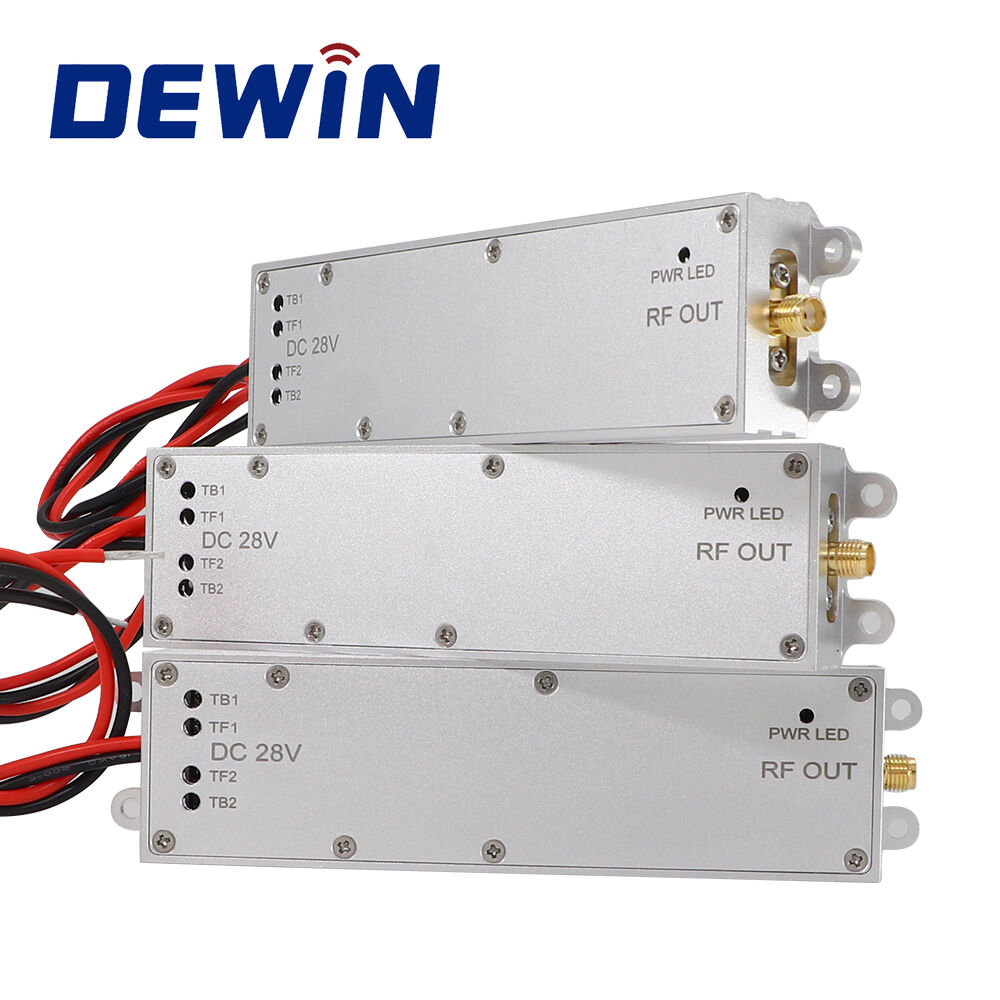
Core RF Principles Behind LoRa Anti-Drone Module Interference Range
Chirp Spread Spectrum for Long-Range, Low-Power Signal Discrimination
The LoRa anti-drone modules rely on something called Chirp Spread Spectrum (CSS) modulation to get that extra reach while using very little power. This makes them work well even when regulations limit how strong the signal can be. What CSS does is take those narrowband signals we normally see and spreads them out across a wider band as these linear frequency chirps. The result? About 15 dB better performance than regular FSK methods, which means these systems can pick up signals down to around -148 dBm sensitivity levels. And here's what really matters in practice: they can still tell apart drone control signals from everything else even when the signal noise ratio drops below -20 dB. Plus, they handle tricky situations where drones move fast or fly close to ground level without getting confused by things like multipath fading or Doppler effects messing with the signal quality.
Adaptive Frequency Hopping to Counteract Drone Communication Resilience
LoRa anti-drone modules tackle FHSS-equipped drones by employing real time adaptive frequency hopping that syncs up with what it sees from actual threats. The system works fast too - within just a few milliseconds it spots where the drone is jumping around in frequencies, creates a map of those movements, figures out where they might go next, then moves its jamming signal across different ISM bands like 868 or 915 MHz while keeping everything lined up properly during evasive maneuvers. Testing in real world conditions shows these systems can disrupt over 80 separate channels continuously, yet they do all this while staying well under 100 milliwatts of power output. What makes this approach so effective is combining CSS sensitivity with smart targeting across the spectrum, which means operators don't need big powerful amplifiers to knock out FHSS drones effectively.
LoRa Protocol Advantages That Extend Effective Interference Range
Link Budget Optimization: Sensitivity Gains and Spreading Factor Trade-offs
What makes LoRa stand out in terms of link budget is mainly because of its impressive receiver sensitivity at -148 dBm plus the ability to adjust spreading factors between SF7 and SF12. When we crank up those spreading factors, we get around 5 to 8 dB more processing gain which really extends how far signals can travel through interference, though there's always a catch. Higher SF means slower data rates and longer time on air for transmissions. That's why military grade equipment tends to switch to higher SF settings when dealing with drones actively trying to disrupt communications. They need maximum detection range and effective jamming capabilities, but still want to maintain basic command functions. This kind of smart compromise works wonders in situations where regular radio frequency systems just give up, particularly when faced with all sorts of electronic noise and overlapping channels in crowded spectrum conditions.
Urban vs. Rural Propagation: How LoRa Anti-Drone Modules Maintain Range in Obstructed Environments
The way LoRa handles signal propagation gives it good coverage even when dealing with different types of geography. Cities present special challenges because buildings can block signals by about 20 dB, but LoRa still manages around 2 to 5 kilometers of working distance. This happens thanks to features like Doppler tolerant demodulation techniques, spreading factors that let multiple channels work at once without getting jammed, and quick changes in frequency to skip over dead spots. Out in the countryside things get better still, with distances stretching from 10 to 15 kilometers. The system works so well there because it operates on lower frequencies that penetrate through trees and hills much better than other technologies. Tests have shown that even in areas full of obstacles, LoRa only loses about 15 to 20% of its range compared to open spaces. That's way ahead of Wi-Fi systems which typically lose 60 to 70% performance in similar situations. Because of this flexibility, many security companies are now using LoRa for monitoring everything from city infrastructure to far-flung borders where traditional wireless solutions just don't cut it.
Real-World Performance Validation of LoRa Anti-Drone Modules
Field Deployment: 3.2 km Reliable Interference Range in Mountainous Border Zones
Mountain borders present unique challenges for drone detection systems, especially when there are elevation changes over 1,000 meters, thick vegetation cover, and harsh weather conditions. Tests showed that the LoRa anti-drone module can interfere with signals up to around 3.2 kilometers away, which beats traditional radio frequency countermeasures by roughly 40 to 60 percent in similar environments. What makes this system work so well is its ability to adaptively select spreading factors and use chirp spread spectrum encoding, keeping the signal strong even when there's no direct line of sight between devices. Field tests lasting several weeks revealed impressive results too. The system managed to disrupt most commercial drones at a rate close to 98%. It does this by jamming both the control frequencies (like 2.4 and 5.8 GHz) and GPS signals (around 1.575 GHz) all at once. Most drones would then trigger their safety protocols within about eight seconds after the jamming starts, either landing automatically or flying back to where they took off from.
The module works pretty well even at only 100 mW transmit power which means it can run on solar energy for over three days without needing any grid connection this is really helpful in areas where setting up equipment is difficult. We tested how it performs in extreme temperatures ranging from minus 30 degrees Celsius all the way up to 55 degrees, plus heavy rain falling at rates of around 50 millimeters per hour. Over twelve whole months of nonstop operation, there was never a time when performance dropped below 3.2 kilometers range. What we found shows that LoRa technology actually works for counter drone systems meant to protect important facilities located in tough terrain or places with harsh weather conditions.
FAQs
1. What is Chirp Spread Spectrum (CSS) and why is it used in LoRa anti-drone modules?
The Chirp Spread Spectrum is a modulation technique that spreads narrowband signals across a wider band as linear frequency chirps. It's used in LoRa anti-drone modules to enhance signal reach while using minimal power, providing better discrimination in low signal-to-noise environments.
2. How does adaptive frequency hopping help counteract drone communication resilience?
Adaptive frequency hopping allows LoRa anti-drone modules to quickly detect and adapt to frequency changes made by FHSS-equipped drones, maintaining jamming effectiveness across multiple channels while consuming less power.
3. How do spreading factors affect LoRa's interference range?
Adjusting spreading factors in LoRa systems can increase processing gain but may result in slower data rates. Higher spreading factors offer better interference range and detection capability, beneficial in environments with electronic noise and channel overlap.
4. Why is LoRa preferred over Wi-Fi systems in obstructed environments?
LoRa offers better signal penetration and performance retention in obstructed environments like urban settings or mountainous regions. It significantly outperforms Wi-Fi by maintaining more of its range under similar conditions.
Table of Contents
- Core RF Principles Behind LoRa Anti-Drone Module Interference Range
- LoRa Protocol Advantages That Extend Effective Interference Range
- Real-World Performance Validation of LoRa Anti-Drone Modules
-
FAQs
- 1. What is Chirp Spread Spectrum (CSS) and why is it used in LoRa anti-drone modules?
- 2. How does adaptive frequency hopping help counteract drone communication resilience?
- 3. How do spreading factors affect LoRa's interference range?
- 4. Why is LoRa preferred over Wi-Fi systems in obstructed environments?