 EN
EN

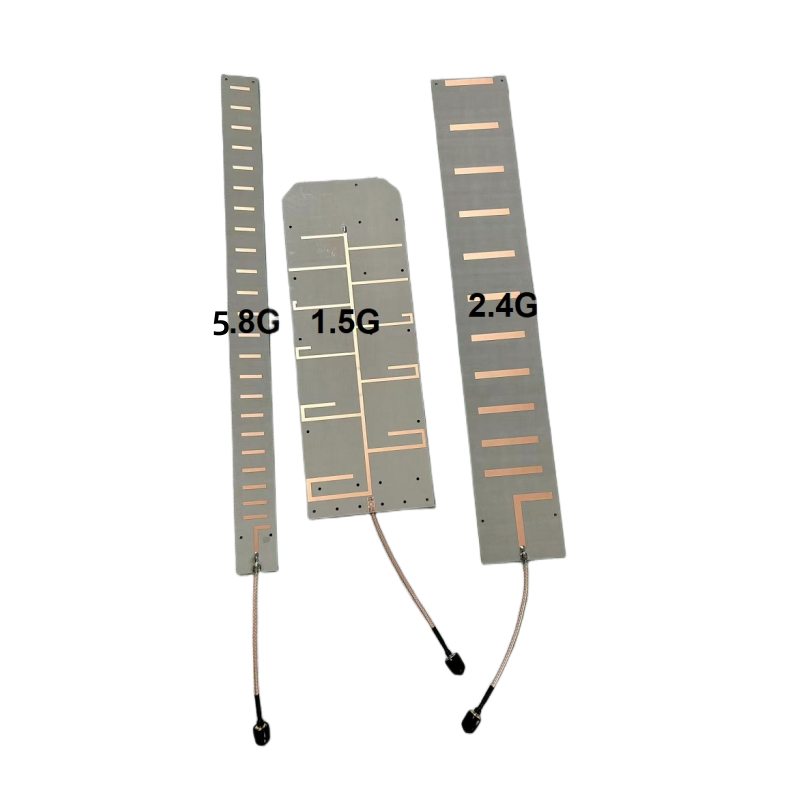
Core Technical Specifications of an Anti Drone Antenna
Frequency Range Compatibility: Covering 400–6000 MHz for Broad Drone Signal Detection
Modern drones operate across diverse frequency bands—including 900 MHz control links, 2.4 GHz telemetry and Wi-Fi-based control, and 5.8 GHz video downlinks—making 400–6000 MHz coverage essential for comprehensive detection. This range spans all major ISM and licensed UAV bands, enabling reliable identification of commercial, hobbyist, and custom-built UAVs. Narrowband antennas risk missing frequency-hopping or spread-spectrum drones, whereas broad-range designs intercept signals across dynamic operational spectrums. Field validation confirms systems with this bandwidth detect 98% of consumer drones within a 1.5 km radius—significantly outperforming limited-range alternatives (Defense Technology Review 2023).
Gain and Directivity: Balancing Wide-Area Surveillance vs. Precision Jamming Range
Antenna gain (measured in dBi) directly influences effective jamming distance and angular coverage. Low-gain omnidirectional antennas (3–5 dBi) deliver uniform 360° surveillance ideal for perimeter security and early warning, while high-gain directional models (12–15 dBi) extend precise targeting to over 3 km. This trade-off affects system efficiency: directional arrays require approximately 60% less transmission power than omnidirectional equivalents to achieve equivalent neutralization range—reducing thermal load, energy consumption, and long-term operational costs.
Polarization Type: Why Circular Polarization Improves Anti Drone Antenna Reliability in Dynamic Environments
Circular polarization (CP) is the de facto standard for counter-drone RF systems due to its resilience against orientation shifts and environmental distortion. Unlike linearly polarized antennas—which suffer severe signal loss during drone banking, pitching, or rapid maneuvers—CP maintains consistent coupling regardless of aerial attitude. This mitigates polarization mismatch, a primary cause of false negatives in cluttered urban settings where multipath reflections from buildings degrade linear signal integrity. CP antennas demonstrate 40% higher target retention in mobility testing, especially critical when engaging autonomous drones executing evasive flight patterns. Their inherent resistance to rain fade further ensures stable performance across adverse weather conditions.
Anti Drone Antenna Types and Operational Use Cases
Omnidirectional Anti Drone Antenna: Ideal for Perimeter Monitoring and Early Warning
Omnidirectional antennas provide continuous 360° RF coverage without mechanical repositioning—making them foundational for perimeter-wide situational awareness. Their uniform radiation pattern supports persistent monitoring of large, open areas such as border corridors, power substations, and stadium perimeters. Though lower in gain—and therefore best suited for shorter-range detection—they excel at early threat identification and layered defense architectures. Deployed at 500-meter intervals along security boundaries, installations have reduced unauthorized drone intrusions by 76% (Defense Technology Review 2023).
Directional and Phased Array Anti Drone Antenna: Enabling Targeted Interdiction and Real-Time Tracking
Directional antennas focus RF energy into narrow beams, extending detection and jamming ranges beyond 5 km while minimizing collateral interference. When integrated with real-time tracking software, they isolate individual drones amid dense RF environments. Phased array variants take this further: beam steering occurs electronically—without moving parts—at sub-100-millisecond refresh rates, enabling responsive engagement of swarming or maneuvering UAVs. This precision allows surgical disruption of command-and-control or navigation links within defined sectors. Combined with spectrum analyzers, directional phased arrays achieve 98% neutralization efficacy in controlled operational trials (Counter-UAS Journal 2024).
Project-Specific Deployment Factors for Anti Drone Antenna Integration
Site Constraints: Urban Density, RF Noise, and Physical Mounting Requirements
Urban deployments present distinct challenges for anti drone antenna integration. High-rise structures create signal shadows and multipath distortion, while ambient RF noise from cellular base stations, public Wi-Fi, and IoT networks can obscure low-power drone signatures. Optimal installation requires:
- Elevated mounting points, preferably above rooftop parapets or on dedicated masts, to maximize line-of-sight coverage
- Directional shielding or filtering to suppress out-of-band interference from adjacent transmitters
- Environmental hardening for operation across -40°C to +70°C and IP66-rated protection against dust and moisture
- Structural analysis for weight distribution and wind loading on rooftops, vehicles, or temporary towers
Corrosion-resistant materials (e.g., marine-grade aluminum or stainless steel housings) are essential in coastal or industrial zones to preserve long-term RF performance and physical integrity.
Regulatory and Safety Compliance: FCC, CE, and Local Spectrum Authorization Implications
Legal deployment of anti drone antennas demands strict adherence to national and regional spectrum regulations. In the U.S., FCC Part 15 and Part 90 rules govern permissible transmit power, prohibited bands (e.g., GPS L1/L2, air traffic control frequencies), and licensing requirements for intentional radiators. In the EU, CE marking must reflect compliance with RED Directive 2014/53/EU and EN 301 489-1/17 standards. Critical considerations include:
- Prohibitions on jamming aviation safety bands (e.g., 108–137 MHz VHF COM, 960–1215 MHz GPS/ADS-B)
- Mandatory coordination with local aviation authorities near airports or helipads
- Site-specific permitting for permanent installations, particularly within 8 km of controlled airspace
- Pre-deployment spectrum analysis to verify spectral occupancy and avoid unintentional interference
Non-compliance carries significant risk: the FCC levied penalties exceeding $740,000 in 2023 for unauthorized jamming operations near critical infrastructure (FCC Enforcement Advisory 2023).
FAQs
What is the significance of a 400–6000 MHz frequency range for anti drone antennas?
This range covers all major ISM and licensed bands used by commercial and custom-built drones, ensuring comprehensive detection and reducing the likelihood of missing drones operating on different frequencies.
How does antenna gain affect anti drone performance?
Higher gain (measured in dBi) extends the detection and jamming range but narrows the coverage angle, while lower gain offers 360° coverage for wide-area surveillance at shorter ranges.
Why is circular polarization important in anti drone antennas?
Circular polarization enhances performance by maintaining consistent signal coupling despite drone orientation changes, reducing false negatives and improving reliability in complex environments.
What are the primary use cases for omnidirectional vs. directional antennas?
Omnidirectional antennas are ideal for perimeter monitoring with 360° coverage, while directional antennas provide focused beams for long-range detection and precise targeting.
What are the regulatory requirements for using anti drone antennas?
Compliance with local spectrum regulations (e.g., FCC, CE) is crucial, including restrictions on specific bands, licensing, and coordination with aviation authorities to avoid unauthorized interference.
Table of Contents
- Core Technical Specifications of an Anti Drone Antenna
- Anti Drone Antenna Types and Operational Use Cases
- Project-Specific Deployment Factors for Anti Drone Antenna Integration
-
FAQs
- What is the significance of a 400–6000 MHz frequency range for anti drone antennas?
- How does antenna gain affect anti drone performance?
- Why is circular polarization important in anti drone antennas?
- What are the primary use cases for omnidirectional vs. directional antennas?
- What are the regulatory requirements for using anti drone antennas?