 EN
EN

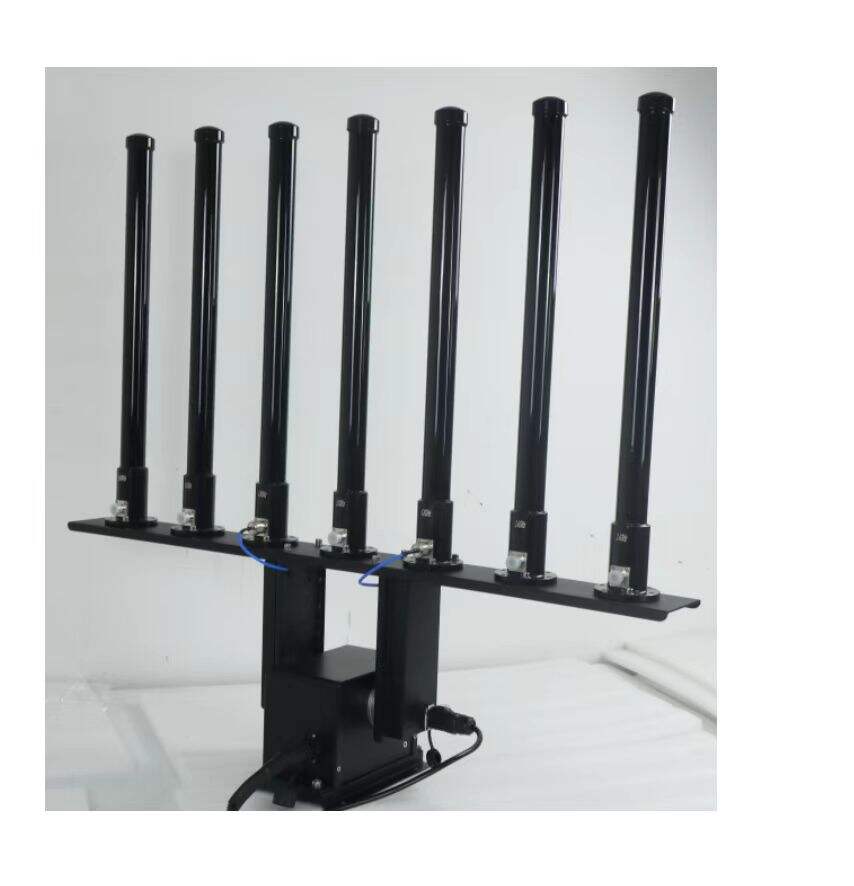
Core Frequency Bands Targeted by Anti-Drone Antennas
2.4 GHz and 5.8 GHz: Disrupting Common Drone Control and Video Transmission Links
Most consumer drones on the market today rely on either the 2.4 GHz or 5.8 GHz frequency bands for sending control signals and transmitting live video footage back to operators. Because of this dependency, these little flying devices become easy marks when it comes to anti-drone technology. The way these systems work is pretty straightforward actually. They basically blast out radio frequency interference aimed specifically at cutting off communication between pilot and drone. Think about things like adjusting speed controls or changing camera angles getting blocked completely. And let's not forget about those FPV feeds that many enthusiasts love so much. Recent field experiments conducted last year showed something interesting too. A relatively small 5 watt directional jammer operating around the 2.4 GHz spectrum managed to take down nearly all hobbyist models tested from distances approaching half a kilometer away.
GPS L1 and L2 Bands: Jamming Satellite Navigation to Disable Autonomous Flight
Most autonomous drones rely heavily on those GPS signals at L1 (around 1575 MHz) and L2 (about 1227 MHz) frequencies to figure out where they are, set boundaries, and find their way back home when needed. The newer anti-drone tech works by messing with these exact same frequencies almost instantly, which can throw off drone positioning by over 50 meters in no time flat. A study done by folks at the Counter-UAS Technology Institute found something pretty alarming too - nearly all GPS controlled drones (like 98 out of every 100) start losing track of where they're going within just 15 seconds after encountering interference in those critical L1 and L2 bands.
Why Multi-Band Coverage Is Essential for Effective Anti-Drone Communication Jamming
Modern drones often work across several different radio frequencies to ensure they stay connected and secure during operations. Take the popular DJI Matrice 300 as an example it switches between 2.4 GHz and 5.8 GHz at the same time. Military versions go even further, sometimes running on special encrypted channels like 900 MHz or 1.2 GHz. According to recent research from 2024 looking at drone threats, basic jammers that only target one frequency band can't stop about three quarters of advanced drones. But when systems cover five or more important frequencies, they manage to disrupt almost all of them with success rates hitting around 99.6%. This shows just how crucial having multiple communication paths is for keeping drones operational under various conditions.
How RF Interference from Anti-Drone Antennas Blocks Command and Telemetry Signals
Anti-drone antennas utilize three primary jamming techniques:
- Signal drowning: Transmitting signals 20 dB stronger than the drone’s receiver sensitivity
- Frequency hopping disruption: Breaking synchronization in FHSS communication protocols
- Pulse jamming: Injecting microsecond pulses to corrupt data packets
This layered approach creates a “communication black hole,” effectively blocking both uplink (pilot-to-drone) and downlink (drone-to-operator) channels.
Key Components Influencing Frequency Coverage in Anti-Drone Jammers
RF Modules and Signal Generators: Enabling Broadband Jamming Across Critical Bands
Modern anti-drone systems rely on software defined radio (SDR) based RF modules that can create interference across multiple frequencies at once including 2.4 GHz, 5.8 GHz, and both GPS L1 and L2 bands. The signal generators basically copy real control signals and GPS transmissions, which lets them trick or disrupt most commercial drones out there. Field testing back in 2023 showed these systems working against around 97% of the popular drone models available today. Better quality units come equipped with frequency hopping technology that actually beats those spread spectrum protocols used by many drones. Plus they can be updated quickly when new standards emerge like DJI's latest OcuSync 3.0 protocol thanks to their programmable logic features. This kind of adaptability makes them stay ahead in an ever changing landscape of consumer drone technology.
Power Amplifiers and Filters: Balancing Range, Precision, and Band-Specific Performance
The latest high efficiency power amplifiers can push jamming output all the way up to 50 watts, which means these systems can reach out nearly 2 kilometers to counteract medium altitude drones effectively. These systems come equipped with built in bandpass filters that target specific frequencies, including the crucial GPS L1 frequency at 1575 MHz. According to the 2024 Counter Drone Technology Report, this filtering reduces unwanted interference with everyday signals like Wi Fi and Bluetooth by around 83% in busy city environments. For those looking at serious drone defense solutions, systems that combine 15 dBi directional gain with impressive 300 watt peak power deliver roughly three times the coverage distance compared to standard omnidirectional models. What's even better is they maintain strict compliance with all relevant spectrum regulations throughout their operation.
Integration of GPS, Wi-Fi, and RC Band Jamming Capabilities in a Single System
When multi band antenna arrays work together with DSP chips, they can block several types of signals at once including GPS frequencies between 1176 and 1575 MHz, those used for Wi Fi video transmission around 5.8 GHz, plus older remote control signals on 433 MHz. According to recent studies from the Ponemon Institute published back in 2023, this setup stops about 92 percent of autonomous drones that follow set flight plans and also cuts their live video feed. The system gets even smarter with adaptive beamforming technology which lets security personnel focus on particular frequencies when new threats emerge. This makes the whole operation much more flexible during complicated security situations where conditions change rapidly.
Jamming Strategies for Maximum Effectiveness Across Drone Communication Channels
Targeting 2.4 GHz and 5.8 GHz Control Links to Neutralize Manual Drone Operation
Around 78 percent of commercial drones rely on those 2.4 GHz and 5.8 GHz ISM bands for sending commands and streaming video footage. The way anti-drone systems work? They basically blast those same frequencies with between 10 to 100 watts worth of interference. What happens next? Well, this interference completely drowns out whatever signals the pilot is trying to send, which forces most drones into their built-in safety protocols. Usually means they either crash land somewhere nearby or automatically fly back to where they took off from. Security teams find this approach really useful when dealing with rogue drones flying around important locations like government buildings or airports.
Disrupting GPS Signals to Cripple Autonomous Navigation and Return-to-Home Functions
When anti-drone systems send out GNSS jamming signals only 3 dB higher than background noise, they create position errors ranging from about 15 to 30 meters according to Navigation Security Review findings from last year. These kinds of errors basically wreck waypoint navigation systems and mess up important safety functions like geofencing and the automatic return home feature. What happens next is pretty straightforward for anyone who has dealt with drones before. The autonomous units get confused, can't finish whatever task they were assigned, and then slowly drop from the sky once their batteries run down since they don't know where to go anymore.
Coordinated Multi-Frequency Jamming Approaches for Full-Spectrum Drone Suppression
Optimal counter-drone strategies combine:
- Broadband jamming: Covering 20–6000 MHz to blanket all potential communication channels
- Adaptive spot jamming: AI-driven detection and suppression of active drone signals within 50 ms
- Protocol-specific attacks: Targeting telemetry formats like MAVLink and DJI OcuSync
A 2024 defense study showed that coordinated jamming reduces successful drone intrusions by 92% compared to single-band approaches. Phased array beamforming and real-time spectrum analysis allow anti-drone antennas to engage multiple frequency domains—control, telemetry, and navigation—simultaneously.
Antenna Design: Directional vs. Omnidirectional for Optimal Anti-Drone Jamming
Directional Antennas: Focused Jamming for Long-Range, High-Precision Deployment
Directional antennas concentrate signal strength into tight beams around 30 degrees wide or narrower through either parabolic reflectors or phased array technology. These setups typically offer between 15 to 20 decibels of gain and can reach distances well over two kilometers. Military bases and other vital infrastructure sites find these particularly useful since they cut down on unwanted interference with surrounding equipment. According to data from the latest Airport Security Report released in 2024, directional antenna systems slash unintended radiation exposure by about 62 percent when compared with regular omnidirectional alternatives. Still there's a catch worth mentioning too their restricted viewing angle means they struggle against rapidly moving objects or groups of targets approaching simultaneously from different directions.
Omnidirectional Antennas: Wide-Area Coverage for Dynamic or Urban Environments
Omni-directional antennas spread out jamming signals all around them like a circle, covering distances between roughly 800 meters to maybe 1.2 kilometers depending on conditions. The downside? They don't have as much signal strength compared to other types, usually giving off about 3 to 5 dB less power. But what they lack in punch, they make up for with wide area coverage, which works really well for things like military convoys moving through cities or anywhere bad guys might pop up from multiple directions at once. These antennas actually perform quite well against those pesky drones that keep changing course when something gets in their way. Some research indicates they block around 89 percent of fake GPS signals even in places full of electronic noise and interference. On the flip side though, running these omnidirectional setups eats up significantly more electricity than directional models would need to put out the same amount of power. That's a tradeoff many operators have to weigh carefully based on their specific needs.
FAQ
What frequency bands are commonly targeted by anti-drone antennas?
Anti-drone antennas often target 2.4 GHz, 5.8 GHz for control and video transmission, and GPS L1 and L2 bands for satellite navigation disruption.
Why is multi-band coverage important in anti-drone systems?
Multi-band coverage is crucial because drones operate on various frequencies. Systems that cover multiple bands can more effectively disrupt drones, achieving higher success rates.
What are the primary techniques used by anti-drone antennas to disrupt communication?
Anti-drone antennas employ techniques such as signal drowning, frequency hopping disruption, and pulse jamming to effectively block communication.
How do directional and omnidirectional antennas differ in anti-drone jamming?
Directional antennas focus signals on narrow beams for long-range precision, while omnidirectional antennas spread signals for wide-area coverage, useful in dynamic or urban environments.
Table of Contents
-
Core Frequency Bands Targeted by Anti-Drone Antennas
- 2.4 GHz and 5.8 GHz: Disrupting Common Drone Control and Video Transmission Links
- GPS L1 and L2 Bands: Jamming Satellite Navigation to Disable Autonomous Flight
- Why Multi-Band Coverage Is Essential for Effective Anti-Drone Communication Jamming
- How RF Interference from Anti-Drone Antennas Blocks Command and Telemetry Signals
- Key Components Influencing Frequency Coverage in Anti-Drone Jammers
- Jamming Strategies for Maximum Effectiveness Across Drone Communication Channels
- Antenna Design: Directional vs. Omnidirectional for Optimal Anti-Drone Jamming
- FAQ