 EN
EN

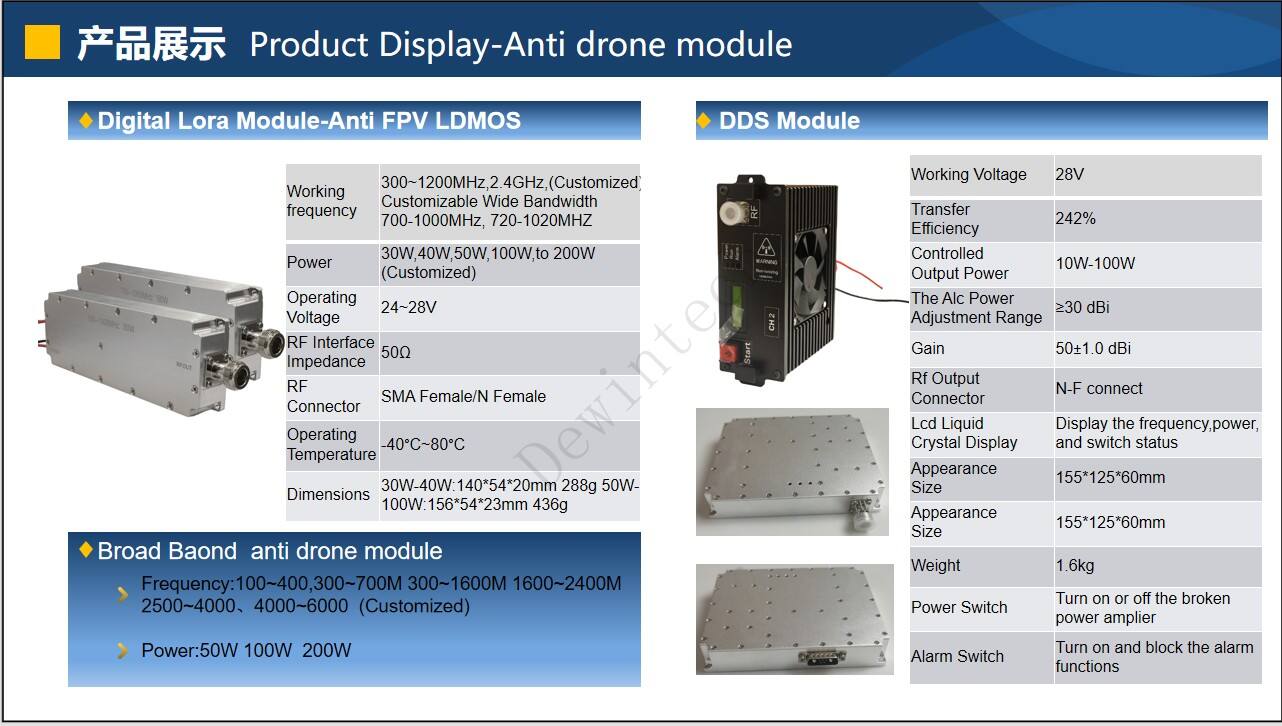
Why LoRa Modules Excel in Anti-Drone Interference Environments
Chirp Spread Spectrum: How LoRa Modules Resist Drone RF Detection and Jamming
LoRa modules rely on something called Chirp Spread Spectrum, or CSS for short, which makes them pretty good at resisting those pesky drone-based RF detectors and jammers out there. What happens is the signals get spread out over really wide frequency ranges using these chirp pulses. And this actually makes the transmissions resistant to what's known as narrowband jamming, which is basically the go-to method for most hostile drones trying to interfere. According to research from Maciejak Reluf back in 2023, LoRa systems can work even when the signal-to-noise ratio drops down to -20 dB. That means they literally operate beneath the background noise level, so regular drone surveillance equipment just can't pick them up. Another benefit comes from how the broadband chirp works in city environments. We've all seen those tall buildings creating urban canyons where signals bounce around everywhere. But instead of getting messed up like traditional links do, LoRa handles this multipath fading much better. Throw in some forward error correction techniques along with those random frequency changes, and what we get is reliable communication without giving away any patterns that could be exploited by people with bad intentions.
Link Budget Advantage: Extended Range and Penetration for Counter-Drone Coverage
LoRa’s exceptional link budget enables reliable counter-drone coverage over 10–15 km—even in obstructed environments—outperforming legacy FSK systems at equivalent transmit power (Visionmetering, 2023). This advantage arises from three core features:
- Ultra-high sensitivity (up to –152 dBm), sustaining connectivity despite severe attenuation from terrain or reinforced structures;
- Adaptive Data Rate (ADR), which dynamically adjusts spreading factor, bandwidth, and coding rate to preserve link resilience amid interference;
-
Low-power operation (<100 mW), supporting extended battery life during persistent jamming missions.
Together, these traits allow single base stations to establish robust perimeters around critical infrastructure—penetrating concrete walls and operating cleanly in license-free sub-GHz ISM bands (e.g., 868 MHz EU / 915 MHz US), well clear of mainstream drone control frequencies at 2.4 GHz and 5.8 GHz.
Key LoRa Module Specifications That Impact Anti-Drone Effectiveness
SX1276 vs. SX1262 vs. LR1121: Comparative Analysis for Tactical Jamming Duty
Effective counter-drone systems demand precise alignment between module capabilities and operational requirements. Three chipsets dominate tactical deployments:
| Specification | SX1276 | SX1262 | LR1121 |
|---|---|---|---|
| Sensitivity | –148 dBm | –149 dBm | –152 dBm |
| Interference Resilience | Standard CSS only | Enhanced CSS + FHSS | Multi-band adaptive hopping + real-time spectrum analysis |
| Power Efficiency | High RX current (12 mA) | Ultra-low RX (4.5 mA) | Dynamic scaling (2.8–5 mA) |
| Jamming Response | Fixed bandwidth | Automatic channel avoidance | Autonomous band selection & avoidance |
For older installations where budget matters most, the SX1276 still works well enough despite lacking any smart anti-jamming features. When looking at mobile devices that need to run on batteries for extended periods though, the SX1262 becomes a better choice. It draws about 62 percent less power when receiving signals and comes with built-in frequency hopping capabilities, making it perfect for covert operations over long durations. Then there's the LR1121 module which stands out because it can switch between Sub-GHz and 2.4 GHz frequencies while constantly scanning the airwaves. This allows it to dodge those pesky licensed drone control channels like the 5.8 GHz band automatically. The device really shines in busy city environments where signals tend to crash into each other all the time. According to research published last year in the IoT Security Journal, these areas face signal collision risks above 78%, so having this kind of self-awareness makes a big difference.
Real-World Deployment Considerations for LoRa Modules in Counter-Drone Systems
Urban vs. Rural: How Environment Shapes LoRa Module Selection and Antenna Integration
The environment plays a big role when it comes to picking modules and figuring out antenna strategies. Urban areas present unique challenges because of all the radio frequency traffic, signals bouncing off buildings, and how structures block signals. That's why engineers often go for modules like the SX1262 or LR1121 that handle interference better, combined with directional antennas such as patches or sector arrays. These setups help push signals through concrete walls and cut down on unwanted side emissions. For range versus time spent transmitting, adaptive spreading factors from SF7 up to SF10 strike just the right balance so systems stay reliable even when channels change rapidly. Things look different in rural spots where there's nothing blocking the view. Here, companies can take advantage of open spaces with omnidirectional antennas and max out at SF12 spreading factor to get signals over 15 kilometers away sometimes. Putting up Yagi or log-periodic antennas higher gives them extra reach across flat landscapes. No matter if it's city or country, equipment needs to withstand serious temperature swings too. Most industrial gear works reliably from minus 40 degrees Celsius all the way up to plus 85, keeping operations running smoothly whether it's freezing cold or scorching hot outside.
Regulatory Compliance and Coexistence with Licensed Drone Control Bands
Legal and operational viability hinges on strict adherence to regional radio regulations while maintaining effective anti-drone functionality. LoRa modules must operate exclusively within unlicensed ISM bands (868 MHz in Europe, 915 MHz in North America) and implement proactive coexistence mechanisms to avoid interfering with licensed drone control channels. These include:
- Real-time spectrum analysis to detect active 2.4 GHz and 5.8 GHz drone command links;
- Automatic power reduction below 20 dBm when proximity sensors identify controlled airspace;
- Time-division transmission protocols that prevent simultaneous emission conflicts;
- Integrated bandpass filtering to suppress harmonics to –36 dBm.
Compliance with ETSI EN 300 220 (EU) and FCC Part 15 (US) is non-negotiable—not only to avoid regulatory penalties but also to ensure interoperability with other authorized spectrum users in sensitive security environments.
FAQ
What makes LoRa modules resistant to drone jamming?
LoRa modules use Chirp Spread Spectrum (CSS) technology, which spreads signals over a wide range of frequencies, making them resistant to narrowband jamming typically used by drones.
How do LoRa modules establish long-range counter-drone coverage?
LoRa modules have an exceptional link budget that allows coverage over 10-15 km, even in obstructed environments, by utilizing high sensitivity, adaptive data rates, and low-power operation.
What specifications differentiate LoRa modules SX1276, SX1262, and LR1121?
The SX1276 has standard CSS, the SX1262 features enhanced CSS with FHSS, and the LR1121 offers multi-band adaptive hopping with real-time spectrum analysis, along with varying power efficiencies and jamming responses.
Why is antenna selection and integration important for LoRa modules?
Choosing the right antenna is crucial because urban and rural environments present different challenges, affecting signal range and reliability. Directional antennas work better in urban areas, while omnidirectional antennas optimize rural coverage.
How do LoRa modules comply with regional regulations?
LoRa modules operate within unlicensed ISM bands and use techniques like real-time spectrum analysis and time-division protocols to coexist without interfering with licensed drone control channels, ensuring compliance with regulatory standards.
Table of Contents
- Why LoRa Modules Excel in Anti-Drone Interference Environments
- Key LoRa Module Specifications That Impact Anti-Drone Effectiveness
- Real-World Deployment Considerations for LoRa Modules in Counter-Drone Systems
-
FAQ
- What makes LoRa modules resistant to drone jamming?
- How do LoRa modules establish long-range counter-drone coverage?
- What specifications differentiate LoRa modules SX1276, SX1262, and LR1121?
- Why is antenna selection and integration important for LoRa modules?
- How do LoRa modules comply with regional regulations?